
Summary
Editor's rating
Value for money: fair price for a proven everyday shell
Design: simple, clean, and definitely more shell than streetwear
Comfort and fit: good once you size up and layer right
Materials: proper waterproof shell, but don’t expect magic breathability
Durability: feels solid, but not a tank
Real-world performance: rain, wind, and everyday use
What you actually get with the Dubliner
Pros
- Genuinely waterproof and windproof with taped seams and effective DWR
- Lightweight shell that works across seasons when layered properly
- Simple, clean design that fits everyday city use as well as hiking
Cons
- Not insulated at all – you must layer in colder weather
- Fit runs a bit snug; many people will want to size up for comfort with layers
- No pit zips or advanced ventilation, so it can get warm during intense activity

Specifications
View full product page →| Brand | Helly Hansen |
A simple rain jacket that actually does its job
I’ve been wearing the Helly Hansen Dubliner Jacket (Men’s, 597 Navy) as my main rain shell for a few weeks now. Nothing fancy in how I used it: commuting to work, walking the dog, a couple of windy coastal walks, and standing around on the sidelines of a football game in drizzle and proper rain. I wasn’t trying to baby it, just grabbed it whenever the weather looked sketchy and went out.
Right away, what stood out is that this is clearly a shell, not a warm winter coat. There’s a thin, quick-dry lining, but no insulation. If you expect it to keep you warm at 5°C in just a t‑shirt, you’re going to be cold. With a hoodie or fleece underneath though, it’s totally fine. That lines up with what a lot of people say: it’s meant for layering, not for being a puffy jacket.
In terms of protection, it handled rain and wind better than most “fashion” rain jackets I’ve tried. The Helly Tech fabric and sealed seams do their job: I didn’t get any leaks at the shoulders or along the zipper, even in a 40‑minute walk in proper heavy rain. I wouldn’t call it mountaineering gear, but for everyday use and hiking, it’s more than enough.
Overall, my first impression was: no drama, it just works. It’s not the lightest thing in the world, it’s not super technical-looking, and it doesn’t feel like a trash bag either. It sits in that middle ground of “normal jacket that happens to be properly waterproof,” which for daily life is honestly what most people need.
Value for money: fair price for a proven everyday shell
Considering the price point this usually sells at and the 4.5/5 rating from thousands of reviews, I’d say the Dubliner hits a pretty good balance of cost and performance. You’re paying more than for a supermarket raincoat, but less than for high-end Gore-Tex gear. For that, you get proper waterproofing, a known brand, and a jacket that works in real bad weather, not just drizzle.
Where it earns its keep is versatility. It’s light enough for spring and autumn showers, and with a fleece underneath it works fine in winter for most city conditions. So instead of buying a separate "rain-only" shell and another midweight jacket, this one can cover a lot of situations if you’re okay with layering. That makes it good value if you want one main waterproof jacket that you’ll actually use a lot.
On the flip side, it’s not packed with advanced features. No pit zips, no fancy pockets, no removable liner. If you compare it to some technical outdoor jackets, you might feel it’s a bit basic. Also, if you only need something for occasional light showers and don’t care about long-term durability, you could definitely get away with a cheaper option and save money.
For someone who regularly walks, commutes, or spends time outside in wet and windy conditions and wants something reliable without going into premium prices, I think the value is solid. It’s not the cheapest, not the most advanced, but it sits in a sensible middle ground where you actually get what you pay for.
Design: simple, clean, and definitely more shell than streetwear
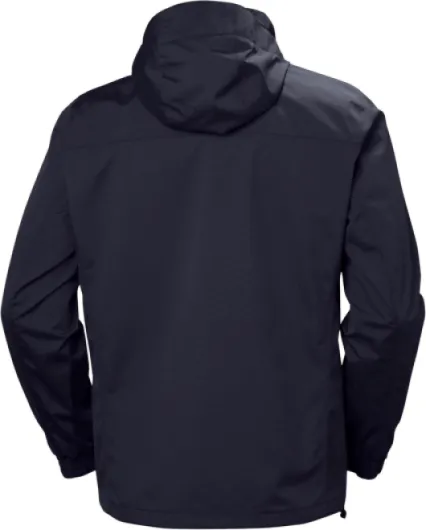
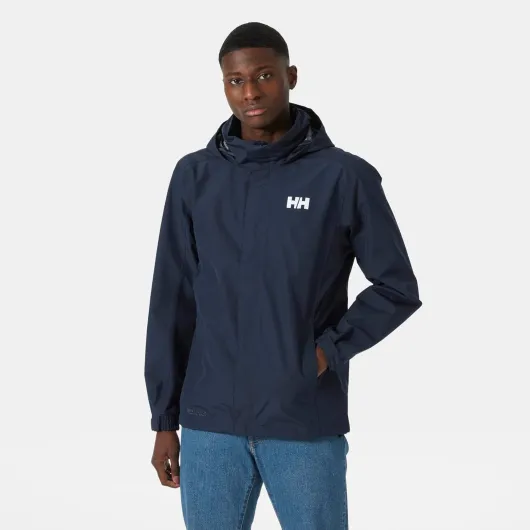
Design-wise, the Dubliner is pretty low profile. The fit is described as “fitted,” but in reality it’s more of a regular cut: not baggy, not super slim. On my body (average build, bit of a belly), it looks clean enough to wear to the office without feeling like I’m in full hiking mode. The navy color helps with that – it passes as a normal jacket, not just outdoor gear.
The length is standard: it hits around the hips, not covering your backside. For commuting and walking, that’s fine, but if you want something that covers more of your thighs, this isn’t it. The collar comes up fairly high, which is good for blocking wind around the neck, especially when the hood is deployed. Zipped all the way up, it sits just under the chin and doesn’t choke, at least for me.
One thing I like is the lack of random decorative stuff. The lines are clean, pockets are where you expect them, and there aren’t 15 logos or weird colored panels. It’s basically a plain shell with discreet branding. That makes it easy to wear with jeans, chinos, or even over a shirt and trousers without looking out of place. You’re not going to turn heads, but you also don’t look like you’re heading to climb Everest.
If I had to nitpick on design, I’d say: the hood shape is more functional than stylish. It’s not the nicest-looking hood when it’s up, and if you don’t adjust it properly it can feel a bit boxy. Also, the jacket could use a tiny bit more length in the back for better coverage when you’re bending or sitting on a wet bench. But overall, the design is practical and blends in easily, which is what I want from a daily rain jacket.
Comfort and fit: good once you size up and layer right
Comfort-wise, the big thing is sizing. On me, my usual size felt okay with just a t‑shirt, but once I threw a hoodie or medium fleece underneath, it started to feel a bit snug across the shoulders and chest. That matches what several other buyers say: if you plan to layer, go one size up. When I tried the next size, it made a big difference – still not baggy, but much easier to move in and zip comfortably with a mid-layer.
The inside lining is smooth and doesn’t cling, so you can slide it on over a jumper without wrestling with your sleeves. The fabric is not stretchy (low stretch polyester), so all the freedom of movement comes from the cut. For normal walking, commuting, and light hiking, I had no issues with range of motion. If you’re doing climbing or activities where you need big overhead arm movement, you might feel the limits of the cut a bit more.
In terms of warmth, like I said earlier, this is not a warm jacket on its own. On a chilly, windy day around 8–10°C with just a t‑shirt, I was cold after a while. Add a fleece or thick sweatshirt and it turns into a pretty comfortable combo. In milder temps (12–18°C) with light wind, it’s fine over a long-sleeve top. The wind protection is strong – you really feel the difference when you zip it up in gusty conditions. That wind-blocking effect adds a lot to perceived comfort.
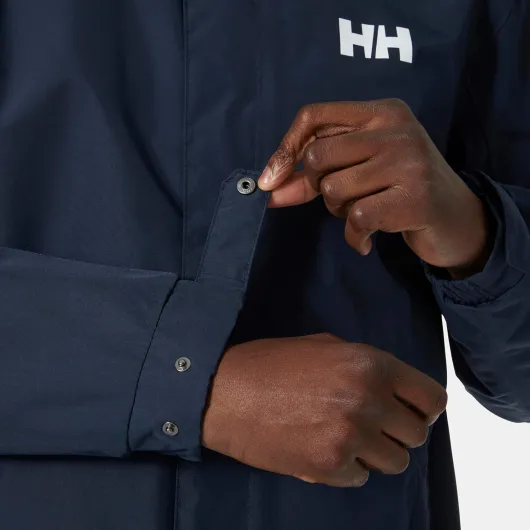
One more detail: the cuffs and collar. The Velcro cuffs let you snug them down so water doesn’t run up your sleeves, and they don’t scratch or dig in. The collar is high enough to keep wind off your neck and, at least for me, doesn’t rub or annoy when fully zipped. Overall, once you dial in the right size and accept that it’s a shell that wants layers, comfort is pretty solid for day-to-day use.
Materials: proper waterproof shell, but don’t expect magic breathability
The jacket is 100% polyester with Helly Tech waterproofing and a DWR (durable water repellent) treatment on the outside. In practice, that means rain beads up and rolls off, and the fabric itself doesn’t soak through quickly. During a couple of heavy showers, water was literally beading on the surface and flicking off when I shook my arms. No dark wet patches creeping in like you get with cheap “water resistant” coats.
The inner lining is a lightweight polyester that feels smooth against the skin, not sticky like some plasticky shells. It does dry fast. After getting wet in the rain, I hung it up in the hallway and it was basically dry to the touch by the next morning. That’s handy if you use it daily. The seams are taped, and I didn’t see any loose threads or sloppy stitching on mine – everything looked well put together out of the box.
Now for breathability: Helly Tech is marketed as breathable, and to be fair, it’s not a sauna. On a mild, slightly humid day (around 15–17°C) walking at a decent pace, I didn’t feel drenched in sweat, just a bit warm like you’d expect. But if you’re pushing hard uphill or wearing a thick fleece underneath, you’ll still get some condensation inside. This is pretty standard for this type of jacket. It’s not a miracle fabric, it’s just better than a cheap plastic raincoat.
Overall, the materials feel solid for the price range. The shell doesn’t feel thin or fragile, and the zippers and snaps feel like they can handle regular use. If you’ve used high-end Gore-Tex jackets, you’ll notice this is a step down in terms of finesse and breathability, but you’re also paying a lot less. For normal everyday and hiking use, the material choice is perfectly sensible.
Durability: feels solid, but not a tank
I obviously haven’t owned this jacket for years, but after a few weeks of regular use and some rough handling, it still looks basically new. No fraying seams, no loose threads, and the zippers are still smooth. The outer fabric feels tough enough for brushing against branches or rough walls without instantly snagging. It’s not super thick like a workwear coat, but it doesn’t feel fragile either.
The DWR (water repellent coating) is still going strong so far – water beads nicely. Based on similar jackets I’ve had, that coating usually needs a refresh after a year or so of regular use, especially if you wash it a lot. The good news is you can reproof it with standard spray-on or wash-in waterproofing products. The fabric itself and the taped seams are what really matter for long-term waterproofing, and Helly Hansen generally does a decent job there.
One small downside: the main zipper can be a bit sticky to start, especially when trying to line it up in a hurry. It hasn’t broken or anything, but you do have to pay attention when you’re zipping it fast. This matches some other reviews that mention the zips having a tendency to stick. Not a deal-breaker, but worth mentioning if you hate fiddly zippers.
Overall, for a lightweight polyester rain jacket, the durability feels pretty solid for the price. If you’re using it for commuting, walking, and weekend hikes, I’d expect it to last several seasons easily with basic care. If you’re going to abuse it daily on construction sites or hardcore bushwhacking, you might want something heavier-duty, but that’s not really what this model is aimed at.
Real-world performance: rain, wind, and everyday use
Let’s talk about what matters: does it keep you dry and out of the wind? In my use, yes. I had it on in a proper downpour for about 40 minutes walking, plus several 20–30 minute trips in steady rain. No leaks at the shoulders, no water creeping in through the main zipper, and the hood did its job without constantly needing adjustment. Water beaded off nicely thanks to the DWR, and the jacket didn’t feel heavy or waterlogged afterwards.
Wind protection is honestly one of the strong points. On a coastal walk with strong gusts, I went from feeling chilled in just a sweatshirt to comfortable as soon as I threw the Dubliner on. The fabric blocks wind really well, and the hem drawcord plus snug cuffs help seal things up. You do feel a bit like you’re in a light shell, but there’s no flapping or annoying noise unless it’s really blowing hard.
Breathability is decent but not magic. On flat city walks or gentle trails, I stayed comfortable. On a steeper uphill section, I did start to feel warm and a bit clammy inside, especially with a thicker layer underneath. There are no pit zips, so you’re relying on the main zip and occasionally opening it halfway to dump heat. For commuting, dog walks, and moderate hiking, it’s fine. For fast hiking or very active stuff, you’ll probably notice the limits.
As a general daily jacket, it works well. It’s light enough to carry in a bag, quick to throw on, and looks normal enough for office or city use. It’s not trying to be hardcore alpine gear, but for 90% of wet, windy days that normal people deal with, the performance is more than good enough.
What you actually get with the Dubliner
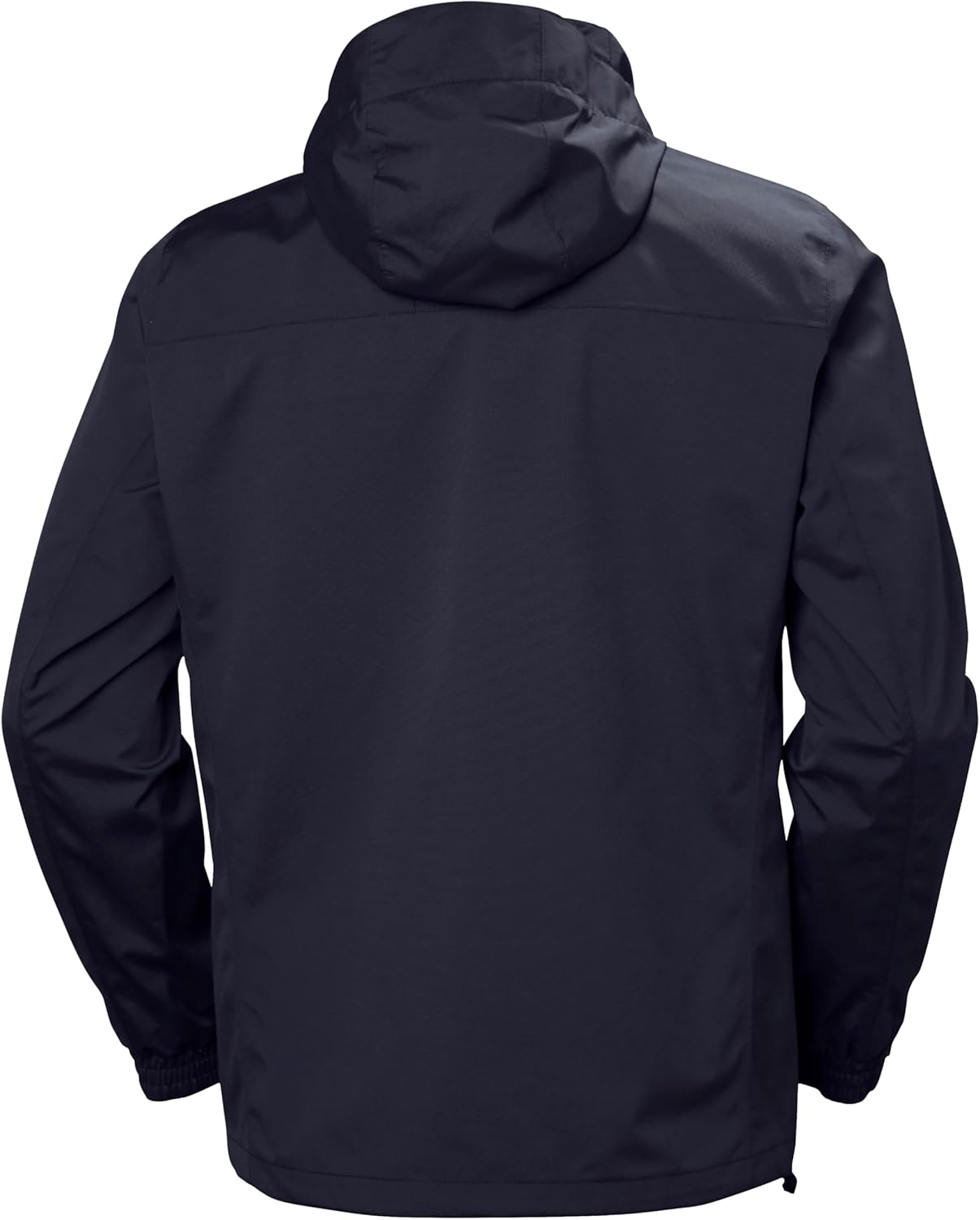
Out of the bag, the Dubliner is pretty straightforward: standard-length rain jacket, long sleeves, two hand pockets with zips, an internal chest pocket, and a hood that folds away into the collar. Mine is the 597 Navy color, which is a dark navy that looks almost black in low light. Branding is low-key: a Helly Hansen logo on the chest and one on the back of the hood, but nothing screaming for attention.
The jacket weighs about a pound, so it’s on the light side but not ultra-packable like some super-thin hiking shells. It’s fine to stuff into a backpack or tote bag, but it won’t crush down into some tiny pocket-sized bundle. The packable hood is actually handy: you can zip it into the collar when you don’t need it, and the collar then looks like a regular stand-up collar. Folding it back in does take a bit of fiddling the first few times, but once you get the hang of it, it’s fine.
Features-wise, you get:
- Full front zipper with storm flap and snaps
- Two zipped slant hand pockets
- One internal zipped pocket (good for a phone)
- Adjustable cuffs with Velcro
- Drawcord at the hem to tighten the bottom
- Stowable hood with simple adjustment
So, nothing flashy, but all the basics are there. No pit zips, no fancy tech pockets, no removable liners. If you like simple gear that does a core job well, this setup makes sense. If you want a Swiss army knife jacket packed with features, this is going to feel a bit barebones.
Pros
- Genuinely waterproof and windproof with taped seams and effective DWR
- Lightweight shell that works across seasons when layered properly
- Simple, clean design that fits everyday city use as well as hiking
Cons
- Not insulated at all – you must layer in colder weather
- Fit runs a bit snug; many people will want to size up for comfort with layers
- No pit zips or advanced ventilation, so it can get warm during intense activity
Conclusion
Editor's rating
The Helly Hansen Men’s Dubliner Jacket in Navy is, in simple terms, a reliable waterproof shell that does what it’s supposed to do without trying to be fancy. It keeps the rain out, blocks wind very well, and is light enough to carry around without thinking about it. You do need to remember it’s just a shell – there’s no real insulation – so the whole point is to combine it with layers depending on the season. Once you accept that, it makes a lot more sense.
I’d recommend it to people who walk or commute in bad weather, do regular hikes, or just want one solid rain jacket that doesn’t look too sporty for city use. If you’re okay with sizing up for layering and you don’t expect top-tier mountaineering performance, you’ll probably be pretty happy with it. On the other hand, if you want a very warm coat, loads of features, or ultra-breathable high-end fabric, this isn’t the right pick. There are more technical and more insulated jackets out there, they just cost more.
Overall, I’d give it a 4/5: good protection, decent comfort, clean design, and fair price. Not perfect, not flashy, but a pretty solid everyday rain jacket that gets the job done in real-world weather.