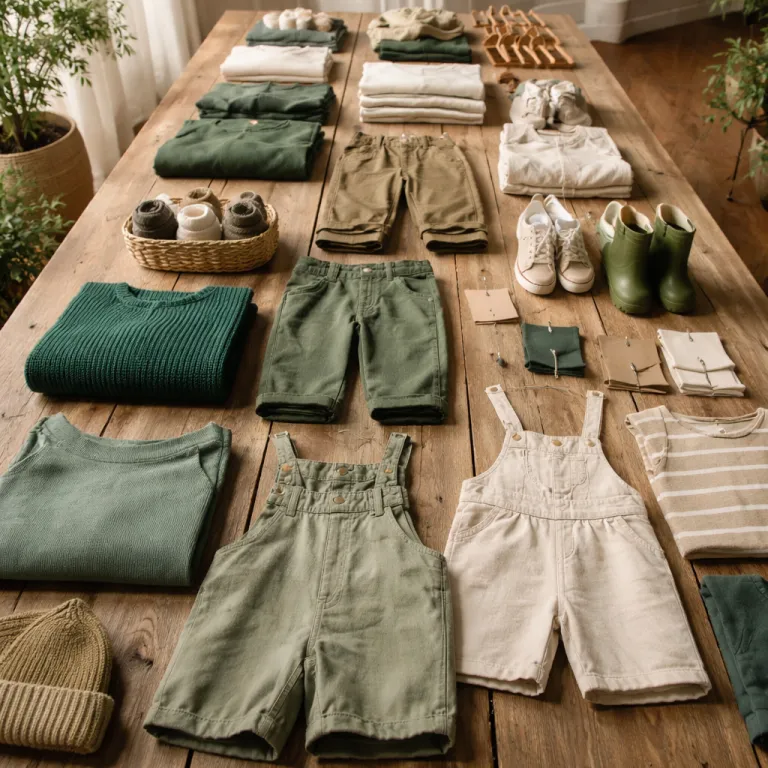
Gender neutral kids clothing as a bigger style playground
Gender neutral kids clothing is not a beige compromise; it is a bigger style playground for children who want color, print and personality. When you stop dividing kids clothes by gender and start thinking in terms of fabric, fit and function, you suddenly see how many outfits can move freely between girls and boys without losing character. The result is simple: every kid gets more options, and parents waste fewer years buying children’s clothing that never really felt like their child.
Look at how Primary approaches kids’ clothing with its wall of saturated basics where every shirt, short and hoodie comes in every shade for all children. There is no boys’ section and no girls’ section, just rows of cotton pieces where a red T-shirt, a cobalt legging or a striped neutral clothing sweatshirt can be mixed into any outfit a kid imagines. That is what real neutral clothes look like: not colorless, just free from the old boys–girls script that used to dictate what kids could wear.
Gray Label, based in Amsterdam, takes another route with organic cotton fleece, ribbed leggings and boxy sweatshirts that feel like elevated loungewear for neutral kids. Their kids’ clothing silhouettes are deliberately relaxed, so the same size can fit a three-year-old boy or girl with only a small cuff roll, which stretches the life of the clothes over several years of growth. When parents talk about how these kids’ clothes feel, they mention softness first and style second, which is exactly the hierarchy you want for a toddler who lives on the floor.
Mon Coeur pushes gender neutral kids clothing into the eco narrative, using recycled fibers and playful graphics that still read chic on city playgrounds. A neutral baby romper in their line might carry a bold heart print or a hand-drawn planet, and it lands equally well on boys and girls because the design language is about curiosity, not gender. For a style-conscious mom raising a fashion-loving kid, this is where ethics, aesthetics and practical children’s clothing finally share the same club.
Retailers, however, still cling to the boys–girls split, which shapes how moms and dads shop long before they reach the rack. When a mom walks into a store and is directed to the girls’ dresses or boys’ shirts, she is being nudged toward a policy of separation that no longer reflects how many families actually dress their kids. The most progressive multi-brand boutiques now create a single kids’ clothing floor, then use clear sizing terms and fabric notes instead of gender labels, which makes shopping easy and quietly radical.
Online, the friction shows up in navigation menus that say boys, girls and baby, while the product photos tell a more fluid story. Some sites add a small gender neutral filter, but hide it under skip content links or in sidebars, which sends a mixed message about how central neutral clothing really is to their identity. Parents who care about this shift quickly learn to ignore the category names and search by color, fabric and size instead, building neutral clothes outfits that feel truer to their children than any pink or navy aisle ever did.
For toddlers between one and five years, the age when play is physical and constant, the fit of kids’ clothes matters more than the label on the hanger. A boxy shirt with dropped shoulders lets a kid climb, while a tapered jogger in organic cotton keeps the clothes feeling secure without pinching soft baby bellies. When you evaluate children clothing this way, gender becomes background noise and the real question is whether the outfit can survive the school run, the club playdate and the sandbox.
Parents sometimes worry that neutral kids’ wardrobes will limit self-expression, but the opposite happens when you mix and match across old categories. A floral shirt with track shorts, a lightning bolt knit with a tulle skirt, a neutral baby onesie under a bold graphic jacket: these combinations only appear when you stop asking whether an item was meant for boys or girls. As one Brooklyn mom of two put it, “Once I stopped checking the boys or girls tag and just asked how the clothes feel on my kids, their style exploded.” Style, in this context, is not about erasing gender, but about refusing to let it dictate every stripe, seam and stitch.
Color, print and the end of the beige stereotype
The laziest myth about gender neutral kids clothing is that it means rows of oatmeal sweats and nothing else. In reality, the most interesting neutral clothing brands are leaning into saturated color, graphic prints and unexpected textures that make children feel like the main character in their own story. Beige has its place, but it is no longer the default uniform for neutral kids who want to run, paint and spill in style.
Primary built its reputation on a rainbow that refuses to assign certain shades to boys or girls, offering the same cherry red shirt, emerald jogger and sunflower dress cut to fit every child. When a mom shops there, she can choose a cobalt hoodie for her baby daughter and a lavender short for her son without crossing any invisible policy line about what belongs in each section. That simple act of mix and match color play teaches kids that clothing is a tool for self-expression, not a rule book about gender.
Graphic prints are the next frontier, and they are where brands like Mon Coeur and Northern European labels shine. Stars, lightning bolts and hearts are appearing across kids’ clothes in ways that feel fresh rather than cliché, especially when printed on sturdy organic cotton that makes the clothes feel substantial in small hands. A heart print shirt on a boy or a dinosaur jogger on a girl stops being a statement and starts being just another good outfit when the design language is strong and the clothes fit well.
Look at how pink glitter cowboy boots have been reframed in the kids’ fashion conversation, moving from novelty to staple for children who love drama on the playground. Recent coverage on how pink glitter cowboy boots are redefining kids’ fashion shows how quickly an item can jump from the girls’ aisle to a shared style space when parents stop policing gender. The same logic applies to neutral clothes: once a piece proves it can handle mud, school and years of hand-me-downs, its original label matters far less.
Gray Label and Minimalisma, both rooted in Northern Europe, use muted palettes but avoid the flatness that gives neutral clothing a bad reputation. Their rib knits, merino layers and brushed fleece sets rely on depth of tone and tactile richness, so a sand-colored baby romper or a slate legging feels luxurious rather than bland. When kids wear these pieces, the clothes feel like a second skin, which is why they often stay in rotation for several years before being passed down to another child.
Parents who want to keep wardrobes playful can treat neutral kids’ pieces as the canvas and let accessories carry the louder notes. A soft taupe sweatshirt from a gender neutral line pairs beautifully with a neon beanie, a patterned sock or a bold rain boot, turning a simple outfit into something editorial without sacrificing comfort. This approach also stretches a clothing budget, because the same base layers work across seasons, siblings and shifting tastes.
Retail structure still lags behind this reality, with many e-commerce sites forcing shoppers to choose boys or girls before they can even skip content and reach the product grid. Some brands try to compensate with editorial pages that highlight gender neutral kids clothing, but bury the actual filter under complex menus and confusing sizing terms. For a parent juggling work, school runs and bedtime, shopping easy should mean one clear kids’ clothing category with filters for size, fabric and climate, not a maze of gendered doors.
Color psychology also plays a role in how children experience their clothes, especially in the early years when sensory feedback is intense. Bright hues can energize a tired school morning, while softer tones can soothe a baby who is still adjusting to the world, and neutral clothes can bridge both moods. When you let kids choose from the full spectrum instead of the boys–girls split, you give them a daily lesson in agency that feels as important as any style tip.
Rising designers rewriting the rules for tiny wardrobes
The most exciting work in gender neutral kids clothing is happening in small studios, not global boardrooms. Independent designers are treating children’s clothing as a serious design challenge, asking how to create pieces that respect a child’s body, imagination and need for movement without defaulting to gender clichés. Their answer is reshaping what style-focused parents expect from every shirt, trouser and jacket they bring home.
In Copenhagen, labels like MarMar Copenhagen and Minimalisma have quietly treated kids’ clothes as inherently unisex for years, long before the term gender neutral became a marketing hook. Their cardigans, rib leggings and quilted jackets are cut to fit a wide range of bodies, which means a single size can move from baby to toddler and then to preschooler with only minor adjustments. That longevity matters for both sustainability and budget, especially when a mom wants neutral baby pieces that can pass between siblings without feeling like tired hand-me-downs.
Slow fashion brands such as Gray Label push this further by designing capsule wardrobes where every item can mix and match with every other, regardless of whether it lands on a boy or a girl. A boxy sweatshirt, a drawstring jogger and a simple shirt dress all share the same color story and fabric weight, so parents can build outfits in the dark and still send kids to school looking intentional. This is gender neutral kids clothing as system design, not just a few beige basics sprinkled into a traditional collection.
Sports-inspired designers are also rethinking how club aesthetics translate for small bodies without leaning on boys-only imagery. New smocked golf-inspired collections, for example, show how preppy details can be softened and shared across genders, as seen in recent features on how smocked golf styles are redefining kids’ fashion. When a child wears a striped polo dress or a tailored short with smocking, the reference is sport and heritage, not a rigid idea of who belongs on the course.
Rising designers pay obsessive attention to how clothes feel on skin, because a toddler will reject even the chicest outfit if a seam scratches. They choose flatlock stitching, brushed linings and elasticated waists that respect round bellies and constantly moving limbs, making the clothes feel like a soft hug rather than a costume. Parents quickly learn that when kids’ clothes feel good, battles over what to wear in the morning almost disappear.
These labels also think carefully about policy-level details that big brands often overlook, such as transparent shipping policy pages, clear refund policy terms and a readable privacy policy that respects families. When a parent invests in higher-priced neutral clothing, they want to know how shipping works, what happens if the fit is wrong and how their data are handled. Trust is built not only through beautiful kids’ clothing, but through the boring but essential framework that sits behind every online order.
Age-fit quirks are another area where independent designers excel, especially for the crucial one to five years bracket. They know that a two-year-old and a four-year-old may technically share a size label, but their proportions and movement patterns differ, so they adjust rise, sleeve length and neck opening accordingly. Clear sizing terms on product pages, often with photos of different children wearing the same piece, help parents choose clothes kids can grow into without drowning in fabric.
For fashion-passionate families, these rising designers offer something the high street rarely does: a coherent vision of childhood that respects both style and autonomy. A neutral baby romper with a bold graphic, a ribbed legging that works for boys and girls, a jacket that layers over any outfit in the wardrobe — these are the building blocks of a modern, gender neutral kids clothing closet. The real luxury is not the logo, but the fact that every piece is designed for running, climbing and spilling first, and for the photo album second.
How parents can shop gender neutral without starting from zero
Parents do not need to throw out existing wardrobes to move toward gender neutral kids clothing. The smarter path is to audit what is already in the drawers, identify the most versatile pieces and then add a few strategic items that help everything mix and match across children. This approach respects both budget and attachment, especially when a kid has a favorite shirt or dress they refuse to give up.
Start by pulling out all the solid color basics, denim and simple knits, because these are the easiest to reframe as neutral clothes. A navy jogger, a striped long-sleeve shirt and a grey hoodie can anchor outfits for boys and girls, while more obviously gendered pieces become accents rather than the whole story. When you treat these staples as the core of kids clothing, you quickly see how many outfits can work for any child in the family.
Next, pay attention to how each item fits, because comfort is the real gatekeeper for whether children reach for certain clothes. If a waistband digs in or a neckline feels tight, no amount of style will convince a kid to wear it, so prioritize pieces where the clothes feel soft, flexible and secure. This is where brands like Primary, Gray Label and Mon Coeur often justify their price, because their fabrics and cuts are tested on real kids who run, climb and nap in them.
Outerwear is another powerful lever, and a well-chosen jacket can instantly modernize an older wardrobe. A unisex bomber, a quilted liner or a bright raincoat from a curated list of top jackets can sit over dresses, joggers or school uniforms without clashing, making every outfit look more intentional. When outer layers are neutral clothing in both color and cut, they quietly erase the old boys–girls divide every time a child leaves the house.
Online, parents should treat navigation menus as suggestions, not rules, and use filters for size, fabric and climate instead of gender. Many sites still force a boys or girls choice before you can skip content and reach the full range, but nothing stops you from browsing both and building your own neutral kids’ edit. Pay close attention to shipping policy details, refund policy terms and the privacy policy, because transparent pages here signal a brand that respects families beyond the sale.
For babies, the shift is even easier, because neutral baby bodies, rompers and sleepers already dominate many layette sections. Choosing pieces in rich colors and interesting textures rather than only white or beige helps signal that gender neutral kids clothing can be joyful from the first months. These items also pass smoothly between siblings over the years, whether they are boys or girls, which stretches both budget and emotional value.
Gen Z and millennial parents are driving this change, shaped by their own experiences with rigid school dress codes and limited choices. Many remember being told which colors or prints were appropriate for their gender, and they are determined not to repeat that policy with their own kids. For them, shopping easy means a world where a child can choose a heart print shirt, a dinosaur jogger or a glitter boot without anyone raising an eyebrow.
The generational shift shows up in small, daily decisions: letting a son wear a floral shirt to a club birthday party, sending a daughter to school in a football jersey, or buying one shared coat that fits both siblings. Over the years, these choices accumulate into a wardrobe where gender is just one variable among many, not the master category. In the end, the best gender neutral kids clothing is not what photographs well, but what survives the playground and still feels like the child wearing it.
Key figures shaping gender neutral kids clothing
- Market research from Euromonitor International (2019–2022) reports that unisex and gender neutral kids’ clothing lines grew by more than 20 percent over a recent three-year period, while traditional gender-segmented childrenswear grew in single digits over the same duration. These figures are summarized in Euromonitor’s childrenswear category brief, which tracks global sales of kids clothes by segment.
- A 2021 survey by Mintel found that over 40 percent of millennial parents in urban areas say they actively look for neutral clothes that can be shared between siblings, which directly supports the rise of neutral baby collections and shared wardrobes for boys and girls. Mintel’s report on parenting and childrenswear highlights how this preference shapes what clothes kids receive as gifts and hand-me-downs.
- Data summarized by the Global Fashion Agenda in 2020 indicate that extending the life of a single children’s clothing item by just nine months can reduce its carbon footprint by around 20 to 30 percent, which explains why neutral kids’ designs that pass between siblings are central to sustainable kids’ clothes strategies. Their circular fashion brief cites lifecycle assessments of children clothing across multiple markets.
- Retail analytics from Edited, published in 2022, show that Northern European brands such as MarMar Copenhagen and Minimalisma list a significantly higher proportion of products as unisex compared with US mass-market labels, confirming that this region has treated kids’ clothing as gender neutral standard for many years. Edited’s analysis of product tags and descriptions highlights how often neutral clothing appears in these assortments.
- Consumer behavior studies from McKinsey & Company (2020–2021) note that Gen Z and younger millennial parents are around 25 percent more likely than previous generations to say that traditional gender labels on clothing feel outdated, which aligns with the rapid growth of neutral clothing capsules and mix-and-match collections. McKinsey’s State of Fashion reports connect this shift to broader expectations around inclusivity and how clothes feel for kids of all genders.