Summary
Editor's rating
Value: worth it for racers, overkill for casual skiers
Design: short cuff, narrow shell, no nonsense race look
Comfort: tight, firm, and not very forgiving
Materials and build: stiff plastic, solid rubber sole
Durability: holding up well after intensive junior use
On-snow performance: where they actually shine
Who these boots are really for
Pros
- Very precise, narrow 97 mm fit with strong heel hold for racing
- Short cuff works well for smaller or shorter‑legged skiers, helping stance and control
- Durable Dual Core shell and rubber sole that handle regular training use
Cons
- Tight, firm fit that can be uncomfortable for wider feet or casual skiers
- Stiff 110 flex is overkill for beginners or light, less experienced kids

Specifications
View full product page →| Brand | Rossignol |
Serious junior race boots, not weekend rental stuff
I’ve spent a good chunk of the season on the Rossignol Hero World Cup 110 SC Junior (in UK 3.5 / 235) with a light teen racer, mostly on hard morning pistes and a few local races. These boots are clearly built for kids who already know how to put a ski on edge, not for someone doing their first snowplough. From the first buckle-up, you feel that they’re stiff, narrow, and tuned for gates rather than cruising with the family.
The main thing that stands out is the 97 mm narrow last and the 110 flex on a short cuff. In plain English: they squeeze the foot more than a typical junior recreational boot, and they don’t bend easily. If your kid is used to soft rental boots, this will feel like jumping straight into a race car. Mine took a couple of days to stop complaining about tightness and start appreciating the control.
We used them roughly 15–18 days: training in the mornings, free skiing in the afternoons. That’s enough time to see how the liner packs out, if there are any pressure points, and whether the plastic softens or shows weird flex changes in different temperatures. I also compared them to a pair of Lange RSJ race boots and a softer Rossignol junior model borrowed from the club.
To be clear: these are good performance boots, but they’re not perfect. They do some things really well, like precision on ice and edge grip, and they’re a bit unforgiving in terms of comfort and ease of use. If you’re looking for relaxed all‑day comfort, look elsewhere. If you care more about carving clean lines and stable turns at speed, then they start to make sense.
Value: worth it for racers, overkill for casual skiers
On the value side, the Rossignol Hero World Cup 110 SC Junior sits in that typical race boot price range where you’re clearly paying more than for a generic junior boot. Whether it’s worth it really depends on how your kid skis. If they’re in a club, training regularly, and actually using the performance, then the price starts to feel justified. You get a narrow, precise boot with a proper race flex and decent materials that should hold up for at least a season or two.
If your kid only skis a week per year, honestly, this boot doesn’t make much sense. They won’t fully use the performance, and they’ll just complain about the stiffness and tight fit. In that case, a softer, cheaper junior boot will be more comfortable and give plenty of control for holiday skiing. So from a value point of view, usage frequency and level matter a lot here.
Compared to similar junior race boots from Lange, Atomic or Head, the pricing is roughly in the same ballpark. Performance-wise, I’d put it on par with a Lange RSJ race boot – maybe a bit more progressive in flex thanks to the Dual Core shell – so you’re not getting a bargain, but you’re not getting ripped off either. It’s a pretty solid option in that competitive segment.
So, for a motivated junior racer or a very keen on‑piste kid, I’d say the value is good: you get reliable performance, strong construction, and a boot that will actually help them progress. For everyone else, it’s probably money better spent on a more comfortable boot and maybe an extra lesson or two.
Design: short cuff, narrow shell, no nonsense race look
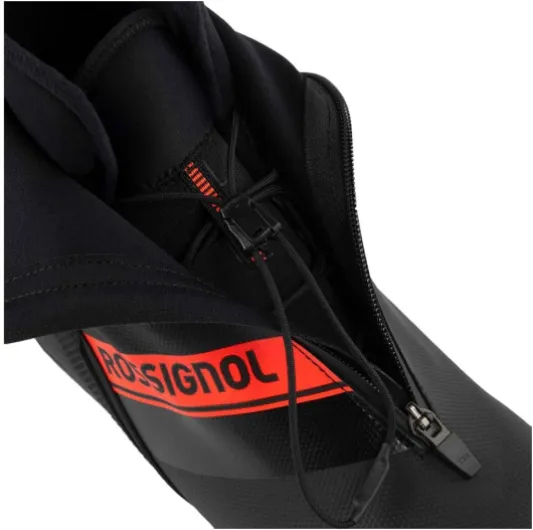
Design-wise, the Hero World Cup 110 SC Junior is pretty straightforward: grey shell, race-oriented shape, four buckles and a power strap. Nothing flashy, no weird gimmicks. I actually like that – it looks like a shrunken adult race boot rather than a toy. The grey color hides scratches and gate burns fairly well, which is handy if you don’t want boots looking trashed after two weekends.
The short cuff (SC) is the key design feature. For smaller or shorter‑legged skiers, a regular adult cuff can push the knee too far back, making it hard to get forward. Here, the cuff height is clearly lower, and my kid naturally ended up in a more centered, slightly forward stance without having to fight the boot. On snow, this translated to easier ankle flex and less tendency to ski in the backseat, especially on steeper sections.
Another design point: the 97 mm last and overall internal volume are tight. The shell looks narrow, especially around the forefoot and heel pocket. That’s good for precision, but it means you should expect some fitting work if your kid has a wide foot or a high instep. We had to play with buckle tension and sock thickness to avoid cutting circulation on colder days. There’s no walk mode, no fancy adjustable spoilers – it’s a pure on‑piste race design.
From a practical standpoint, the buckles feel solid and haven’t bent or loosened so far. The power strap is basic but works; we ended up cranking it pretty hard to get full support from the cuff. One detail I did notice: the tongue shape is fairly aggressive, so if you over-tighten the mid‑buckles, you can create a sharp pressure point over the instep. So, design is clearly biased towards performance over comfort, which is fine if you know that going in.
Comfort: tight, firm, and not very forgiving
Let’s be honest: comfort is not the strong point of these boots, at least not in the usual sense. In a UK 3.5 / 235, with a 97 mm last, they feel tight right away. My kid’s first reaction was basically, “These are too small,” even though the shell check was correct for a race fit. After two full days, the liner started to give a bit, but the general feeling stayed on the snug, racey side. If you’re used to soft rental boots, this will feel like a downgrade in comfort even if performance is higher.
The ankle and heel hold are excellent though. Once buckled, there’s almost no heel lift and very little movement inside the boot. For skiing, that’s great – you can tip the ski on edge with small movements, and the boot follows immediately. But the price you pay is pressure on the sides of the foot, especially if your kid has a wider forefoot. We had mild hot spots around the fifth metatarsal after long days, which we managed by loosening the lower buckles on the last run and between training runs.
Shin comfort is acceptable but not soft. The short cuff helps because it doesn’t bite into the calf as much as a taller adult boot would. Still, if the power strap is cranked and the kid leans hard into the tongue, they’ll feel it. On colder days (below -5°C), my kid complained more about foot numbness than actual pain, which is pretty typical for stiff, narrow boots. Thin performance socks worked better than thick ones, as they reduced bulk and pressure.
So in practice, comfort is "good enough for racing" but not really relaxed. These boots are fine for 2–3 hour training blocks and race runs. For full‑day casual skiing, especially for a less committed kid, they might feel like overkill. If comfort is your top priority, look at a softer flex and wider last. If performance and fit security matter more, and your kid can tolerate some tightness, then these are manageable with a bit of break‑in and maybe a bootfitter visit.
Materials and build: stiff plastic, solid rubber sole
In terms of materials, Rossignol uses their Dual Core plastic shell and a fairly dense liner foam. You can feel it when you try to flex the boot at room temperature: it’s stiff and snaps back instead of staying deformed. On cold early‑morning sessions (around -8°C), the flex got noticeably harder, but not to the point of being a brick. Compared to a cheaper junior boot we had before, this one holds its shape better and doesn’t feel mushy after a few hours.
The liner is pre‑shaped around the ankle bone. Out of the box, it felt quite firm, almost harsh. After about 4–5 ski days, the foam settled and wrapped the heel nicely. I wouldn’t call it plush, but it locks the heel in place, which is what you want for racing. The materials don’t feel luxurious; they feel purposeful and durable. Seams are clean, no loose threads, and the tongue hasn’t collapsed or folded weirdly with use.
The rubber sole is a plus. Grip walking on icy car parks and around the lift area is decent. It’s not like a full GripWalk sole, but it’s definitely less slippery than pure plastic soles I’ve seen on older race boots. So far, no major wear on the toe or heel lugs after 15+ days, and stepping in and out of bindings has stayed consistent, which is important for safety and release.
Overall, the materials match the race orientation: stiff plastic shell, firm liner, and a practical rubber sole. Nothing feels fragile. At the same time, that stiffness and dense liner are part of why these boots aren’t super comfortable at first. You’re trading softness for precision and durability. If you’re okay with that trade-off, the materials are pretty solid for this category.
Durability: holding up well after intensive junior use
After roughly 15–18 ski days, including gate training, free skiing, and plenty of walking around car parks and lift queues, durability looks good. The shell has the usual scuffs from gates and ski edges, but nothing beyond cosmetic. No cracks, no weird whitening of the plastic around the cuff pivots, and the flex feel hasn’t changed noticeably. That’s what I’d expect from a race-oriented boot in this price bracket.
The buckles have taken a few knocks but are still straight and close properly. The micro-adjust threads haven’t stripped, and they still turn smoothly. The power strap Velcro hasn’t lost grip yet, which sometimes happens quickly on cheaper boots. The liner has packed out slightly, as expected, but it’s not collapsing or losing shape dramatically. The ankle area is still firm enough to hold the heel down.
The rubber sole is another positive point for durability. Toe and heel lugs show some wear from walking on rough ground, but there’s plenty of material left, and they still engage with bindings cleanly. Grip is still decent on icy surfaces. If your kid walks carelessly on gravel or asphalt, you’ll see marks, but nothing out of the ordinary. It doesn’t feel like a sole that will need replacing mid‑season.
Overall, I’d say these boots are built to handle a full season of junior racing and training without falling apart. They’re not bombproof forever – kids grow out of them before they actually wear them out – but for the intended use (serious junior skier over one or two seasons), the durability is pretty solid. You’re not paying for fancy finishes; you’re paying for a shell and liner that survive regular, hard use.
On-snow performance: where they actually shine
On snow, the Rossignol Hero World Cup 110 SC Junior really shows why it exists. The edge control is very precise. Once my kid got over the initial tight feeling and adapted to the stiffer flex, turns became much cleaner, especially on icy morning pistes. Compared to the softer recreational boots we used before, there was less wobble at the end of the turn and more confidence going faster. You can see it in how the skis track: less chatter, more solid grip.
The 110 flex feels pretty honest for this size. It’s firm for a junior, but not impossible to bend if the kid has decent technique and some weight. When loading the tongue, the flex builds gradually, and you get a bit of rebound coming out of the turn. That helps with rhythm in GS and makes carving more fun in general. On very flat, slow slopes, the stiffness is a bit overkill, but as soon as you pick up speed or hit harder snow, it starts to make sense.
The short cuff also plays into performance. My kid could stay more centered without constantly fighting to get forward. That alone improved their stance and made transitions between turns smoother. In quick edge changes, the narrow shell and solid heel hold give a direct feeling – when they roll their ankles, the skis react almost instantly. There’s less delay than in the older, roomier boots we had.
If I had to nitpick, I’d say these boots are not very forgiving of bad technique. If the kid sits back or skis too stiff-legged, the boot won’t hide it; they just lose control. So for pure performance and learning proper race posture, they’re helpful. For a casual skier who wants something easy and forgiving, they’ll probably feel tiring and a bit harsh after a while.
Who these boots are really for
On paper, the Rossignol Hero World Cup 110 SC Junior is a competition-oriented junior boot with a narrow 97 mm last, short cuff, and pretty aggressive flex for a small size. In practice, I’d say it’s aimed at: club racers, kids doing regular training, or very keen on-piste skiers who already ski parallel and like to push hard. If your child is still learning basic turns, this boot is overkill and will probably just frustrate them.
The size I had (UK 3.5 / 235) fits smaller, performance-style. My kid has a 22.5–23 mondo foot, and we went slightly tight as usual for race boots. Out of the box, there was almost zero extra space lengthwise; after a few days the liner packed out enough to be tolerable. If you’re used to buying boots “with room to grow”, forget that logic here. These are made to be snug so the foot doesn’t swim around when you roll the ankle.
Rossignol pushes the Dual Core shell idea – basically, different densities of plastic for better rebound and more precise flex. I can’t measure that scientifically, but compared to older junior race boots I’ve seen, the flex does feel more progressive. When the kid loads the tongue, it doesn’t suddenly collapse; it builds up and then pushes back, which helps with timing turns in gates and on hardpack. That part does feel pretty solid.
If I had to sum up the positioning: this is not a casual junior boot, it’s a boot for families already spending time and money on race training. For that crowd, it’s a realistic option. For once-a-year holiday skiers, it’s too stiff, too narrow, and honestly a bit of a pain to live with.
Pros
- Very precise, narrow 97 mm fit with strong heel hold for racing
- Short cuff works well for smaller or shorter‑legged skiers, helping stance and control
- Durable Dual Core shell and rubber sole that handle regular training use
Cons
- Tight, firm fit that can be uncomfortable for wider feet or casual skiers
- Stiff 110 flex is overkill for beginners or light, less experienced kids
Conclusion
Editor's rating
The Rossignol Hero World Cup 110 SC Junior in UK 3.5 / 235 is a serious junior race boot with a narrow 97 mm last, short cuff, and firm flex. It’s clearly built for kids who already ski well and want more precision, not for beginners. On snow, it delivers: edge grip is solid, response is quick, and the flex feels controlled rather than floppy. The short cuff helps smaller or shorter‑legged skiers stay centered, which is a real plus for technique.
On the downside, comfort is only average. The fit is tight, the liner is firm, and cold days can be a bit rough if your kid is sensitive or has a wider foot. This is not a relaxed, all‑day holiday boot. Durability and materials are good though; after a bunch of training days, everything still works as it should, and the rubber sole is holding up well.
In short, I’d recommend this boot for club racers, ambitious junior skiers, or families already deep into race training. For that group, the performance and build quality justify the price. If your kid skis only occasionally or values comfort above all, I’d skip this and go for something softer and wider. It’s a focused tool, and it does that job pretty well, but it’s not the right fit for everyone.