Summary
Editor's rating
Value: worth it for serious racers, overkill for casual kids
Design: short cuff, narrow shell, race look
Comfort: race fit, not torture, but not a sofa either
Materials and build: solid shell, race liner, not exactly plush
Durability: race abuse approved, cosmetics less so
On-snow performance: where these boots actually shine
What these boots actually are (and who they’re for)
Pros
- Stiff flex 90 and narrow 97 mm last give strong edge control for serious junior racers
- Short cuff works well for smaller legs and helps maintain a natural, centered stance
- Race liner and Dual Core shell provide precise, responsive feel without being totally unmanageable for light athletes
Cons
- Fit is tight and warmth is average, so comfort is limited for long, cold recreational days
- Narrow last and race-oriented shape can be problematic for wider feet and may require bootfitting

Specifications
View full product page →| Brand | Rossignol |
Race boots for kids who are past the rental stage
I’ve been dealing with junior race gear for a few seasons now, between my own kid and the club racers I help out with on weekends. The Rossignol Hero World Cup 90 SC in 21.5 is clearly aimed at that crowd: young skiers who are already skiing gates, not just cruising blues. I didn’t wear this exact size myself for obvious reasons, but I had my 12‑year‑old (about 45 kg, aggressive skier) in them for a full training block and I handled all the fitting, buckling, and between‑run feedback.
Right away, the big thing to understand is the flex 90 and 97 mm narrow last. This is not a comfy rental boot; it’s a boot for juniors who know how to put their skis on edge. If your kid is still snowplowing half the day, this is going to feel like overkill and probably just frustrate them. But if they are already carving hard and racing every weekend, the specs actually make sense.
Over about three weeks, we used these in mixed conditions: hard morning ice, chopped‑up afternoon snow, and a couple of warmer days. I watched how my kid skied, how often he complained about pain, and how the boots looked at the end of each day. I also compared them to his previous junior boots (a softer 70 flex from another big brand) to see if the upgrade really brought anything besides a stiffer feel and a fancy race color.
In short, they do what they promise: good power and control for light racers, with a few comfort compromises you’d expect from a narrow race boot. They’re not perfect, and there are some things that annoyed me as a parent and as the guy tightening the buckles in the cold, but overall they sit in the "serious junior race boot" category pretty solidly.
Value: worth it for serious racers, overkill for casual kids
In terms of value, these boots sit in that awkward but normal spot for race gear: not cheap, not the most expensive either, but definitely more than regular junior boots. You’re paying for a stiffer flex, narrow last, and a more technical build. If your kid is doing proper race training several times a week and going to races on weekends, the price starts to make sense. You actually use what you’re paying for: more precise control and better support at speed.
If, on the other hand, your kid skis 10 days a year on family holidays, this boot is frankly too much. They won’t use the flex 90, they’ll probably complain about the tight fit, and you’ll be annoyed you spent extra money on something that mainly adds discomfort for them. In that case, a softer, more forgiving junior boot will do the job and probably keep everyone happier. So value really depends on how serious your kid is and how often they ski.
Compared to other junior race boots from big brands, the Hero World Cup 90 SC is roughly in the same price and performance bracket. You’re not getting a crazy bargain, but you’re also not being ripped off. The Dual Core shell and short cuff design are genuinely useful features for smaller racers, not just marketing slogans. I’d say you get what you pay for: a focused race tool, not a Swiss Army knife boot.
Where value can drop is if your kid has wide or tricky feet and you end up needing a bunch of bootfitting work (punches, grinding, custom footbeds). That can quickly add to the overall cost. If their foot shape matches the narrow 97 mm last fairly well, you’re in good shape. Overall, I’d call the value good for race kids, poor for casual skiers. Buy it with a clear idea of how it will be used, not just because it has "Hero World Cup" in the name.
Design: short cuff, narrow shell, race look
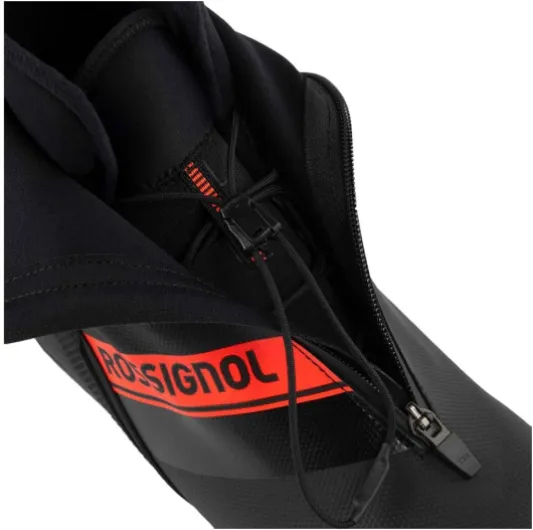
Visually, the Hero World Cup 90 SC looks like a proper race boot. The color we had is grey, pretty neutral compared to some of the loud race boots you see. My kid actually liked that – less flashy, still clearly a race boot but not screaming neon. The shell lines are clean, typical four‑buckle overlap design, with a power strap on top. Nothing fancy in terms of hardware, but it all feels solid in the hands, no flimsy buckles or weird gimmicks.
The key design element is the short cuff. On a smaller athlete, that matters a lot. With some adult boots cut down to small sizes, kids end up getting pushed into the back seat because the cuff is too high and too stiff for their leg length and weight. On this boot, the cuff sits lower on the shin, and my kid naturally stood more centered over the ski. He didn’t have to fight the boot to get forward, which is kind of the whole point of this SC version.
The 97 mm last clearly shows in the shell shape: tight through the midfoot and heel, slightly more space in the forefoot but still on the narrow side. Heel pocket is deep and secure; once the buckles were closed, there was basically no heel lift. For racing, that’s great. For comfort breaks or long gondola rides, he sometimes loosened the second buckle to get some blood flow back, which is pretty normal for this type of boot.
From a parent perspective, I appreciated the straightforward hardware: standard micro‑adjustable buckles, nothing weird to figure out in the cold. The only design thing I’d nitpick is that the grey plastic shows scratches fairly quickly. After a week of training and a couple of race days, they already looked used, especially around the toe and instep from gate hits and walking on rough snow. Not a big deal functionally, but if you care about them looking pristine, that’s not going to last long.
Comfort: race fit, not torture, but not a sofa either
Comfort is where you really need to be honest with yourself about what you want. The Hero World Cup 90 SC has a narrow 97 mm last and a race liner, so it’s never going to feel like a recreational boot. On my kid’s narrow feet, the heel hold was great, and his toes had just enough room not to be crushed. Length in 21.5 was spot on for his foot, with the usual "finger behind the heel" shell check. If we had gone any smaller, it would have been pure pain; any bigger and you’d lose the precise feel that you buy this boot for.
First two days, he complained a bit about instep pressure when the buckles were cranked down for GS. I had to play with the buckle micro‑adjustment to find a middle ground: tight enough to get control, loose enough not to cut off circulation. By day three or four, the liner had started to mold slightly and he stopped bringing it up, except on very cold mornings. So yes, there’s a break‑in period. If your kid is sensitive to pressure or hates tight boots, expect some whining at the start.
The short cuff helps a lot for comfort in the stance. Compared to his previous boots with a taller cuff, he said his shins hurt less after long training sessions. The forward lean felt natural for him, and he wasn’t being pushed backward. That’s a big plus; too many junior boots just shrink adult designs without adjusting the cuff height, and kids end up fighting the boot all day. Here, the stance felt more neutral and less tiring.
On the downside, warmth is average at best. On a windy day around -10°C, his toes got cold after 2–3 hours, even with decent socks. Not frostbite level, but he did ask to go warm up in the lodge sooner than usual. That’s the trade‑off with a thinner race liner. If you ski mostly in milder conditions or shorter race blocks, it’s fine. If you’re doing full‑day family skiing in cold weather, you might want heater socks or regular warm‑up breaks. Overall, I’d call comfort "good for a race boot", but definitely not "all‑day cozy".
Materials and build: solid shell, race liner, not exactly plush
Rossignol talks about Dual Core shell technology, which in plain language means they use different densities of plastic in the same shell to control where the boot flexes and where it stays rigid. Handling the boot, you can feel the shell is quite stiff in the lower part and a bit more forgiving around the cuff area. When my kid flexed them in the living room, the movement was smooth, not a brick wall, which is good for lighter skiers who still need some give.
The liner is clearly a racing‑style liner: relatively thin, firm foam, especially around the heel and ankle. There’s no thick, cushy padding like you get in recreational junior boots. After the first day, my kid pointed out a pressure spot on the outside of one ankle. That’s pretty normal with this kind of liner; we did two things: tighter buckle adjustment to lock the heel down better, and after day three the foam had already packed in slightly and he stopped mentioning it. But if you’re expecting a "slipper" feel out of the box, that’s not what this is.
Inside the boot, the footbed is basic. It works, but it’s nothing special. We swapped it for his custom insole after the first day, and that helped both comfort and stance. I’d honestly plan on doing that if your kid is doing a lot of race training; the stock insole is serviceable but generic. The plastic soles are standard alpine (not GripWalk), so they work fine with race bindings but are a bit slippery walking on ice. That’s just how race boots usually are, but it’s worth knowing if your kid often walks across parking lots or stairs in boots.
Overall, the materials feel robust and purpose‑built: stiff plastics where needed, dense liner foam, no useless extras. On the downside, that also means no real focus on warmth or cushy comfort. The liner holds shape well and gives good feedback, but on colder days my kid’s toes got chilly faster than in his old softer boots, even with decent socks. Not terrible, but you feel that this boot is built for performance first, comfort second.
Durability: race abuse approved, cosmetics less so
Over a few weeks of club training and two race days, the shell held up well. The buckles still close cleanly, no play developed, and the cuff rivets are tight. My kid is not gentle with gear – boots get tossed into the back of the car, kicked off in the locker room, dragged on concrete a bit – and these handled that about as well as you’d expect from a proper race boot.
Where you see wear first is in the cosmetics and soles. The grey plastic picks up scratches and marks quickly. After the first weekend, the toes already showed visible scuffing from walking on rough snow and banging into bindings. The printed graphics also started to show small chips around high‑contact areas. None of this affects performance, but if you’re expecting them to look fresh for long, that’s not realistic. They age like typical race boots: they start to look used pretty fast.
The soles are standard alpine, not replaceable toe/heel blocks like some adult boots. After a couple of weeks, there was some wear at the heel from walking on concrete, but nothing alarming yet. You definitely don’t want your kid walking long distances in them if you want them to last multiple seasons. For a race‑focused kid mostly walking snow to lodge and back, you’ll probably be fine for at least a season or two, depending on how fast they grow out of them.
The liner is holding shape decently. The high‑density foam packs in slightly to adjust to the foot, but it hasn’t turned mushy. Heel hold is still strong. Stitching is intact, and there are no tears or weird pressure ridges forming. Overall, I’d say durability is solid for the intended use: a season (or maybe two) of intense junior racing, provided your kid doesn’t treat them like rental boots and you don’t let them walk across half the resort in them every day.
On-snow performance: where these boots actually shine
Performance is clearly the strong point of the Hero World Cup 90 SC. Once my kid got used to the stiffer flex, his skiing in gates tightened up. On hard morning ice, edge hold felt more reliable compared to his older 70‑flex boots. Watching from the side of the course, I could see him staying more stacked over the outside ski, and he said he felt like he could "lean more without the boot folding". That’s basically what you want from a stiffer junior race boot.
The power transmission from leg to ski is very direct. There’s not a lot of slop or delay; small movements show up quickly in the skis. For a strong junior, that’s great. For a hesitant or backseat skier, that can be punishing, because the boot won’t hide bad technique. When he got lazy and sat back, the skis just ran away from him, and he noticed it right away. In training, that’s actually helpful because it forces them to stay on top of their stance.
In terms of flex feel, the 90 rating feels honest. It’s firm, but not insane for a 40–50 kg kid who skis hard. On colder days, the plastic obviously stiffens up a bit, and he had to work more to flex them. In softer afternoon snow, the boots felt more forgiving and easier to bend. Compared to softer junior boots, this model clearly helps with high‑speed stability. In GS especially, he looked more confident at the top of the turn.
Outside the course, on free‑ski runs, the boots are still fine, but they’re clearly biased toward carving, not play. If your kid likes buttering, jumping side hits, or skiing switch, these aren’t ideal. They’re made to drive a race ski on edge. The feedback is sharp, and the boot rewards clean technique. If that’s what you’re looking for, they do the job well. If you want a mix of park and race, I’d look at something slightly softer and more versatile.
What these boots actually are (and who they’re for)
The Rossignol Hero World Cup 90 SC 21.5 is basically a scaled‑down race boot. Flex 90, 97 mm last, and a short cuff (SC) designed for smaller legs. Rossignol sells it as a competition‑inspired boot for junior racers, and that’s pretty accurate. It’s not a freestyle boot, it’s not an all‑mountain comfort boot, and it’s definitely not for casual holiday skiers who ski five days a year.
The 21.5 size we tested is targeted at kids who are roughly in the 4–6 US size range, depending on brand, generally around 10–13 years old, but that obviously varies with foot length and build. My kid is on the skinny side with narrow feet, and that’s important: this is a narrow fit boot. If your child has wide, chunky feet, you’re either going to need a very good bootfitter, or you should look at a more forgiving model. Out of the box, it hugged his heel and midfoot strongly, and there wasn’t much extra volume.
The boot is built around Rossignol’s Dual Core shell technology, which basically means stiffer and softer plastics are layered to control flex and rebound. In practice, what I noticed is that the boot feels quite progressive for a junior boot: not dead stiff, but you need intent to bend it. My kid said the first day felt "pretty hard" compared to his old 70‑flex boots, but after two training days he said it felt normal and he liked the extra support in fast GS turns.
If I had to place it on a spectrum, I’d say: rental boots on one end (soft and sloppy), then recreational junior boots, then junior race boots like this, and then full FIS‑level race boots that are even stiffer and even less forgiving. So this model sits in that serious club racer zone. If that’s not your use case, you’re probably over‑buying and paying for performance your kid won’t use.
Pros
- Stiff flex 90 and narrow 97 mm last give strong edge control for serious junior racers
- Short cuff works well for smaller legs and helps maintain a natural, centered stance
- Race liner and Dual Core shell provide precise, responsive feel without being totally unmanageable for light athletes
Cons
- Fit is tight and warmth is average, so comfort is limited for long, cold recreational days
- Narrow last and race-oriented shape can be problematic for wider feet and may require bootfitting
Conclusion
Editor's rating
The Rossignol Hero World Cup 90 SC Junior 21.5 is a serious junior race boot that does what it says. Stiff flex, narrow 97 mm last, and a short cuff that actually suits smaller legs. On snow, it gives strong edge control and stable support for kids who are already skiing fast and spending time in gates. My kid’s GS runs got more solid once he adapted to the stiffer flex, and the feedback from the boot clearly helped clean up his technique.
On the flip side, comfort and warmth are only "okay" by normal family‑ski standards. The liner is firm, the fit is tight, and cold days are felt in the toes sooner than in a softer, cushier boot. If your child is still in the beginner or early intermediate stage, this boot is too much: they’ll fight it more than benefit from it. For a club racer skiing regularly, though, the trade‑off makes sense: more precision, less fluff.
So, who should get this? Junior racers with narrow to normal feet who ski a lot and push hard. Parents who understand that race gear is tighter and less comfy but gives more control will be fine with it. Who should skip it? Casual holiday skiers, kids who hate tight boots, and anyone looking for a do‑everything, park‑plus‑piste setup. In that case, your money is better spent on a softer, more versatile junior boot. Used in the right context, the Hero World Cup 90 SC is a pretty solid tool, but it’s definitely not for everyone.