Summary
Analysis score
Average of the criteria rated below
Value for money: a focused tool, not a cheap toy
Chunky kid-friendly design with a bright screen
Battery life: better than many kids’ watches, but configuration matters
Water resistance and daily abuse: how tough is it?
Calls, GPS and messaging: where it shines and where it frustrates
What the imoo Watch Phone Z1 actually offers
Pros
- Clear 4G voice and video calls with safe contact lists and stranger call rejection
- Generally accurate GPS tracking with a simple parent app and class mode
- Good battery life for a kids’ 4G watch (often 2–3+ days) and IPX8 water resistance
Cons
- Messaging is limited: child cannot send normal text replies, only voice messages and emojis via the app
- Some users experience connectivity dropouts requiring manual APN tweaks and patience with support

Specifications
View full product page →| Brand | imoo |
A smartwatch for kids who aren’t ready for a smartphone
The imoo Watch Phone Z1 targets a very specific situation: parents who want to reach and locate their child, but don’t want to hand over a full smartphone with social media and games. It’s a 4G kids’ smartwatch with GPS, video and voice calls, and IPX8 water resistance, aimed at primary and early secondary school ages. On paper, it sits in the middle of the market: not the cheapest, but with more serious specs than the random no-name kids’ watches.
The published data shows a rectangular 33 mm digital screen, 4G connectivity via nano-SIM, built‑in GPS, and a 740 mAh battery in a 51 g body. It runs a closed Android-based system with 128 MB of RAM and storage, so it’s clearly not trying to be a tiny full smartphone; it’s closer to a controlled communication tool. The brand highlights features like class mode, stranger call rejection, and family chat through the imoo app.
Among several thousand Amazon reviews, the general tone is positive: an average of 4.0/5 from over 3,600 ratings suggests that most buyers feel they got what they expected, but there are also recurring criticisms. Some parents praise the call quality, tracking, and battery life, while others complain about network dropouts and unreliable connectivity, which directly affects the safety angle the product is sold on.
In my opinion, the Z1 is interesting if you’re consciously avoiding a smartphone but still want calls and GPS on your kid’s wrist. However, it’s not a magic safety button. The experience clearly depends a lot on SIM choice, network coverage, and how comfortable you are tweaking settings in the app. It looks like a solid candidate, but not flawless, especially if your main reason to buy is constant, guaranteed tracking.
Value for money: a focused tool, not a cheap toy
The imoo Watch Phone Z1 sits in a price band above generic kids’ watches but below premium ecosystems like Apple or Samsung wearables paired with phones. The Amazon ranking (around 60th in Smartwatches and 1,202nd in Electronics & Photo) and the 4.0/5 average from roughly 3,600 reviews indicate that it has found a solid audience. Parents who write longer reviews often mention doing “quite lengthy research” and rejecting cheaper options due to poor feedback, then ending up satisfied with the Z1 despite the higher cost.
What you’re paying for here is a closed, kid‑oriented system with 4G, GPS, and a reasonably polished app. There is no app store, no social media, no distracting games. For many parents, that is precisely the value: they want something between a dumb phone and a smartphone. Several buyers describe the Z1 as being like a “dumb phone with accurate tracking,” and say it’s the perfect compromise between safety, contactability, and avoiding a full smartphone with all the associated issues. They appreciate features like class mode, safe contact lists, and the ability to let grandparents or other relatives join the family chat through the app.
On the other hand, there are compromises you need to accept for the price. The messaging system is limited: the child can’t reply to SMS with text, only via short voice messages in the app or predefined emojis. There is no keyboard for general messaging, even though a basic one exists for Wi‑Fi entry. And if you’re unlucky with your network or don’t want to mess with APN settings, you might run into the connectivity issues that a minority of reviews describe, which seriously undermines the value proposition for safety‑minded buyers.
In my opinion, the Z1 offers good but not spectacular value if your main objective is controlled communication and tracking without giving a smartphone. It makes most sense for families who are comfortable choosing a compatible SIM, possibly adjusting APN settings, and living with the messaging limitations. If you want maximum reliability at any cost, you might consider higher‑end solutions or a basic phone plus GPS tracker. If you want something very cheap and don’t care much about software polish or call quality, cheaper generic watches exist. The imoo Z1 sits in the middle: more refined and thought‑through than budget toys, but not without its quirks.
Chunky kid-friendly design with a bright screen
The imoo Watch Phone Z1 goes for a straightforward kids’ gadget look rather than a mini luxury watch. The case is rectangular, made of resin, with a silicone band in green in this version. With a 33.02 mm screen and 51 g weight, it’s not tiny, but that size is often necessary to fit a proper battery, 4G radio, and camera. Several parents mention that their children (around 10 years old) find it “cool” rather than babyish, which is important if you’re worried about teasing at school.
The display specs are decent for this category: 240 × 240 resolution and up to 1000 nits of brightness. On paper, that should be more than enough for outdoor readability on the way to school. A couple of reviews indirectly confirm that the child can easily see the time and interact with the interface outside. The interface is touch-based, with a tang buckle and hook closure system for the band, so it’s more like a typical sports watch than a fashion piece. There’s an integrated camera for video calls and photos, though storage is limited to 128 MB, so you’re not archiving hundreds of images on the watch itself.
The styling is clearly unisex and sporty. The green band and resin case suggest that imoo is prioritizing durability and kid appeal over subtle design. For younger kids, the slightly bulky look usually isn’t a problem and can even be a plus, as it feels like a “real gadget.” For older preteens, it will depend on how self-conscious they are, but several parents of 10–11 year olds report that their kids are happy wearing it and that friends perceive it as “cool” rather than embarrassing.
In my opinion, the design is functional and aligned with the purpose: visible, robust, and easy to spot on a wrist, with a bright screen and simple touch interface. If you’re expecting something sleek and minimal like a premium adult smartwatch, you’ll likely find it a bit bulky and toy-like. But for a device that needs to survive school, playgrounds, and the odd splash in the sink, the spec sheet and reviews suggest imoo chose practicality over style, which makes sense for this segment.
Battery life: better than many kids’ watches, but configuration matters
The imoo Watch Phone Z1 lists a 740 mAh lithium-ion battery, which is relatively generous for a kids’ smartwatch. The spec sheet oddly mentions “Battery Average Life: 2 years,” which likely refers to expected lifespan rather than a single charge. The more relevant figure is the capacity and what buyers report in daily usage. Several parents say they are seeing around 2 to 3 days of battery life under normal use, with calls, GPS tracking, and some messaging, which is decent for a 4G-connected device.
One reviewer mentions that after adjusting the APN settings according to their SIM provider’s instructions, the watch no longer kept dropping the network and the battery life noticeably improved, reaching “at least 3 days if not 4 or 5” between charges. That makes sense technically: a device constantly searching for network burns through battery quickly, so proper configuration can have a huge impact. Another parent describes the battery as “good, lasts about 2 days with normal use and charges quickly,” which aligns with what you’d expect from a 740 mAh cell in a small wearable.
There are no strong complaints about poor battery life among the highlighted reviews, which is often a good sign because battery is usually one of the first things people criticize if it’s bad. Instead, most comments treat it as a non-issue once the watch is set up correctly. The charging cable is proprietary and included in the box, so you’ll want to keep track of it, as replacing manufacturer-specific cables can be annoying if lost. The relatively light 51 g weight suggests imoo managed to fit this battery without making the watch absurdly heavy for a child’s wrist.
In my opinion, the battery situation is one of the Z1’s strengths compared to many cheaper kids’ 4G watches that barely last a day. If you’re okay with charging every 2–3 nights and you take the time to ensure network settings are not causing constant reconnect attempts, the watch should be reliable enough for school days and after‑school activities. Just don’t expect smartwatch-level always‑on displays and heavy video calling without impacting how long it runs between charges.

Water resistance and daily abuse: how tough is it?
Durability is critical for a kids’ smartwatch, and the imoo Watch Phone Z1 tries to address that with an IPX8 water resistance rating and a resin case plus silicone band. IPX8 generally means the device is designed to handle immersion beyond 1 meter under manufacturer‑specified conditions; here the spec sheet also mentions water resistance depth of 1 meter. In plain terms, it’s meant to survive splashes, hand washing, rain, and some water play. One parent explicitly says their child plays in water without worrying about damaging the watch, which aligns with the advertised protection.
The materials used are fairly standard for this type of product: resin for the case to absorb impacts without cracking easily, and silicone for the strap, which is flexible, sweat‑resistant, and easy to wipe clean. At 51 grams and with a band length of around 193 mm (the sheet oddly lists this in microns, but that’s likely a typo), the watch is not ultra‑light, yet still reasonable for everyday wear. None of the highlighted reviews complain about straps breaking, cases cracking, or screens shattering, which suggests basic physical robustness is adequate for normal kid usage.
Where durability gets more nuanced is on the software and connectivity side. One very negative review argues that the watch is “not a safety device by a long stretch” because of persistent connectivity losses, despite the watch itself showing 4G and Wi‑Fi as available. For that parent, the functional durability — the ability of the watch to stay connected and provide location — is unacceptable, and interactions with support did not lead to a reliable fix. This is less about physical toughness and more about long‑term reliability of the electronics and firmware in real networks.
In my opinion, if you’re thinking of durability as “will it survive a 7‑year‑old’s wrist, the playground, and getting splashed,” the Z1 looks solid on paper and in the majority of comments. The IPX8 rating and choice of materials are reassuring, and there are positive anecdotes about the watch surviving daily life. If your main concern is “will it always be online when I need it,” that’s more complicated. Some parents achieve a very stable setup after APN tweaks; at least one had such a bad experience that they lost trust in it entirely. So physical durability seems good; functional reliability will depend heavily on your SIM, coverage, and patience with configuration.
Calls, GPS and messaging: where it shines and where it frustrates
Performance for the imoo Watch Phone Z1 breaks down into three big areas: call quality, GPS accuracy, and connectivity stability. On calls and video, the feedback is mostly positive. Several parents say voice and video calls are “extremely clear,” with sound quality comparable to a regular phone. Video calling works either between the watch and the imoo app or between two imoo watches, and one buyer notes that even though they don’t know anyone else with an imoo watch, calls through the app work well.
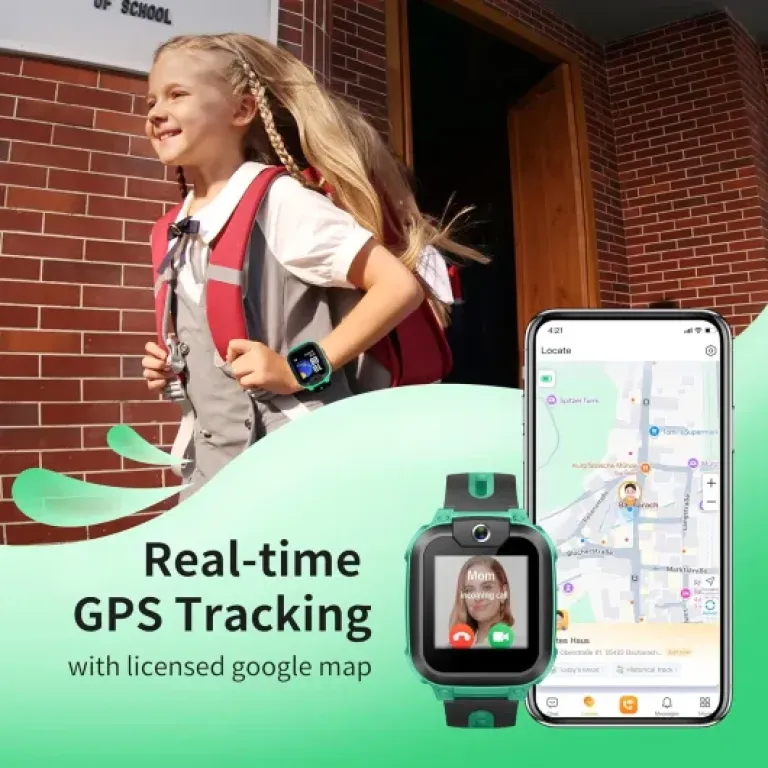
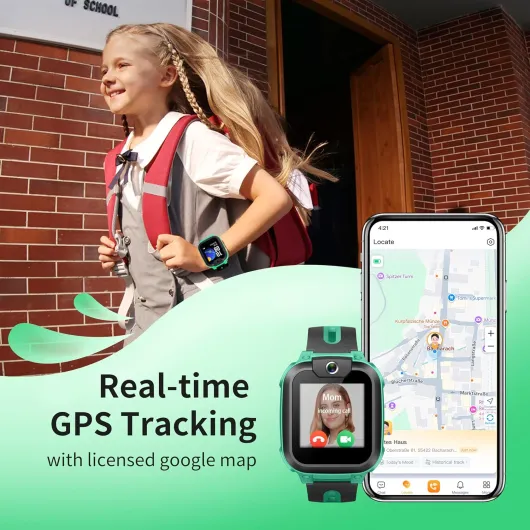
On GPS, opinions diverge a bit but lean positive. Multiple reviews talk about “accurate tracking” and one parent was able to track the watch to the door of a person who had picked it up at a school event. Others mention that tracking is sometimes “a few meters off,” which is normal for consumer GPS, especially in dense urban areas or indoors. On paper, the watch uses built-in GPS with the usual limitations of signal and network, and the brand itself warns that positioning accuracy depends on SIM signal strength and network compatibility.
The real pain point some parents highlight is network stability. A very critical 1‑star review describes a watch that regularly drops out of the imoo app, showing as offline even though the watch itself reports 4G and Wi‑Fi available. In that scenario, the parent can’t see the location or send messages, which completely undermines the safety promise. That parent also describes long, repetitive exchanges with customer support and is clearly frustrated by the lack of a straightforward solution. On the flip side, other parents who initially had network dropouts say they solved it by manually setting APN parameters via the app, after which the watch stayed connected and battery life even improved.
Messaging is another area with limitations. Several buyers explain that while the watch can receive SMS, the child can’t reply via text; responses are only possible as short voice messages through the imoo app, or as predefined emojis. There’s no full keyboard for messaging, despite a basic keyboard existing for Wi‑Fi password entry. One parent calls this “a little bit unorthodox” and inconvenient, especially when they’d like their child to be able to answer a normal text. In my opinion, performance is decent once everything is correctly configured and you have compatible network coverage, but the product demands a bit of technical patience from the parent, particularly around APN settings and understanding the messaging limitations.

What the imoo Watch Phone Z1 actually offers
On paper, the imoo Watch Phone Z1 is a compact 4G smartwatch designed specifically for kids. It uses a nano-SIM (with mentions of Vodafone, O2, Telekom, and MVNOs like GiffGaff, Lebara, Tesco Mobile in reviews) and connects over 4G for calls, messages through the imoo app, and data for GPS tracking. The watch itself weighs 51 g, has a 33.02 mm rectangular digital display with a 240 × 240 resolution and up to 1000 nits advertised brightness, which should keep it readable outdoors. It’s IPX8 water resistant and rated to 1 m depth, so it is supposed to survive splashes and play in shallow water.
The core features are quite focused: phone calls (incoming and outgoing), HD video calls, GPS location, and basic messaging through the imoo app. Parents can set a whitelist of trusted numbers (one review mentions about 10 safe contacts) and also limit incoming calls to known numbers only. The watch connects to the parent app on any smartphone, and several relatives can install the app, with the main parent account controlling who is allowed to connect with the child.
There is no open app store, no social media, and barely any games, which is exactly what many parents in the comments wanted. The spec sheet mentions metrics measured as GPS only, so this is not a full fitness tracker, but one buyer notes a step count function is present. Features like “Class Mode” allow the parent to lock the watch to time-only during school hours, while still keeping GPS and basic safety features active in the background. The watch also supports simple animated emojis and short voice messages inside the imoo chat, but not full SMS texting from the child back to regular phone numbers.
In my opinion, the positioning is clear: this is not trying to compete with Apple Watch or a full Android smartwatch. It’s a controlled communication device plus tracker for kids, with a closed ecosystem. If you want apps, YouTube, games, and freedom, this is the wrong product. If you want something that behaves more like a tightly supervised “dumb phone on the wrist” with GPS, the Z1 lines up with that idea fairly well, at least in terms of advertised functions.
Pros
- Clear 4G voice and video calls with safe contact lists and stranger call rejection
- Generally accurate GPS tracking with a simple parent app and class mode
- Good battery life for a kids’ 4G watch (often 2–3+ days) and IPX8 water resistance
Cons
- Messaging is limited: child cannot send normal text replies, only voice messages and emojis via the app
- Some users experience connectivity dropouts requiring manual APN tweaks and patience with support
Conclusion
Analysis score
The imoo Watch Phone Z1 is a focused kids’ smartwatch for parents who want 4G calls and GPS tracking without giving their child a full smartphone. The spec sheet is solid for this role: IPX8 water resistance, a bright 240 × 240 screen, 740 mAh battery, built‑in GPS, and a controlled Android‑based system with no open app store or social media. Many parents highlight clear voice and video calls, accurate tracking in everyday situations, and useful features like class mode and stranger call rejection. Battery life around 2–3 days, sometimes more after proper APN configuration, is another strong point.
It’s not flawless. Messaging is limited and somewhat awkward, with the watch receiving SMS but unable to reply except via voice messages through the imoo app. A minority of buyers run into serious network dropouts where the watch appears offline in the app despite having 4G signal, which directly undermines its role as a safety device. Fixes often involve tweaking APN settings, which not everyone will be comfortable doing. In my opinion, the Z1 suits families who are tech‑savvy enough to pick a compatible SIM and adjust settings, and who mainly want calls and location with minimal digital distractions. Those expecting bulletproof connectivity out of the box or rich two‑way texting may feel let down.
