
Summary
Editor's rating
Value: good quality, but you pay for the logo and have to accept compromises
Design: smart layout, so-so security, and a misleading name
Comfort: better than it looks, but not a hiking backpack
Materials: tough fabric, low stretch, and decent weather resistance
Durability: built to last, both fabric and hardware
Performance and everyday use: good for planes and offices, tight for bulky loads
What this Haulpack actually is (and isn’t)
Pros
- Very durable G-1000 HeavyDuty Eco fabric with solid zips and stitching
- Comfortable enough for daily commuting and city travel despite minimal-looking straps
- Practical wide top opening and two large front pockets that stay usable even when the main compartment is loaded
Cons
- Laptop compartment is thin and poorly padded, basically forcing you to use a separate sleeve
- Capacity feels tight for 23L and the bag doesn’t handle overstuffing well
- No truly secure internal pocket and easy-access front pockets are not ideal in crowded or high-theft areas

Specifications
View full product page →| Brand | Fjällräven |
A work and travel pack that’s solid but not perfect
I’ve been using the Fjällräven Haulpack No.1 as a work and travel bag for a while now, mainly for commuting with a laptop, a bit of paperwork, and the usual daily junk (charger, water bottle, snacks, light jacket). I also took it on a short city trip by plane as my under-seat bag. So this isn’t a “just unboxed it” opinion – it’s based on actually dragging it around in real life.
The first thing that hit me: this bag feels tough. The G-1000 HeavyDuty Eco fabric is quite rigid at the beginning, almost a bit stiff, but it gives the impression that it can handle years of use. At the same time, it’s not a huge pack. With 23L, it’s more of a daily/commute size than a real “haul everything” bag, despite the name. If you expect a big travel rucksack, you’ll be a bit surprised by how compact it feels once packed.
What I noticed quickly is that the layout is pretty simple: one main compartment, a laptop sleeve, two big vertical front pockets, and two side pockets. No crazy organization, no hidden compartments. That can be good or bad depending on how you like to pack. Personally, I like simple layouts, but with this one I sometimes missed at least one properly secure internal pocket for wallet and keys.
Overall, my feeling is: good quality, good for daily carry and flights, but with a couple of annoying details. The laptop compartment design is the main weak point, and the volume is a bit tight if you carry bulky stuff like shoes or a thick hoodie. If you know that going in and you’re okay with using a separate laptop sleeve, it’s a pretty solid everyday pack. If you want a real laptop-focused or ultra-roomy bag, there are better options.
Value: good quality, but you pay for the logo and have to accept compromises
Let’s talk about the awkward part: price vs. what you actually get. Fjällräven is not a cheap brand, and this bag is no exception. You’re paying for strong materials, a known name, and a certain style. From a pure functional standpoint, there are cheaper backpacks that will also carry your laptop and lunch. So the question is whether the mix of durability, design, and brand vibe is worth it to you.
On the positive side, the quality is clearly above average. The fabric, zips, stitching, and handles feel like they’ll survive years of use. You’re not buying something disposable. It also looks decent in both casual and slightly more formal contexts, which means you don’t need separate bags for work and weekends. The layout, while simple, works well enough for most daily scenarios, and the bag is comfortable for normal urban use.
On the downside, for this price, the laptop compartment design is honestly weak. It’s basically a thin fabric divider with no real padding on the sides, and you’ll almost certainly want a separate laptop sleeve if you care about your device. That sleeve then eats into the internal volume, which already isn’t huge. Also, there’s no proper secure internal pocket for valuables, and the external pockets are easy to access – which is good for you but also good for pickpockets. These are the kind of details that cheaper brands sometimes handle better nowadays.
So in terms of value, I’d say: if you want a tough, long-lasting, “buy it once and keep it” type of daily pack, and you like the Fjällräven style, the price is defendable. If you just need a functional laptop backpack and don’t care about brand or fabric feel, you can get similar practicality for less money elsewhere. It’s good, but it’s not the bargain of the century.
Design: smart layout, so-so security, and a misleading name
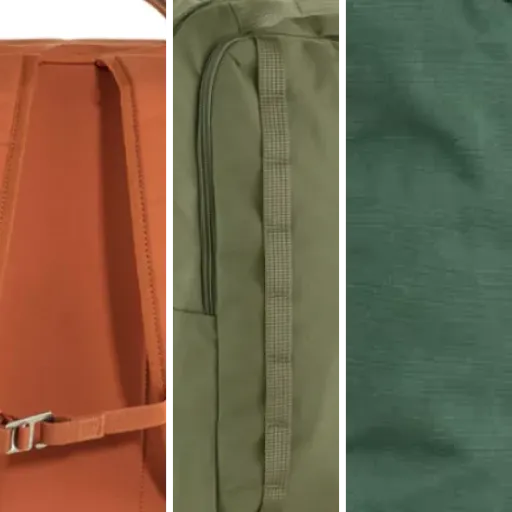
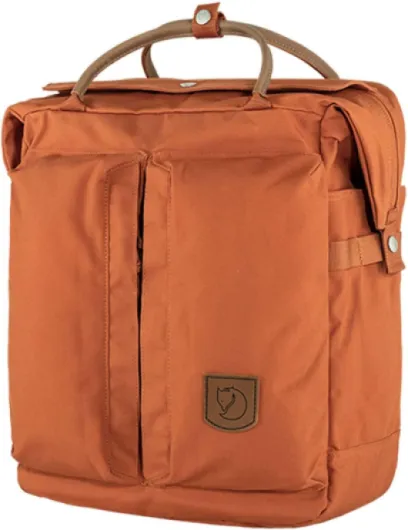
Design-wise, the Haulpack No.1 is pretty clean: rectangular, vertical, no dangling straps everywhere. The version I had in hand was in that foliage/terracotta style – earthy tones, nothing flashy. It looks like a typical Fjällräven piece: simple shape, leather logo, leather handles, and fabric that clearly isn’t cheap plastic. If you like low-key, outdoorsy-looking bags that also work with office clothes, this fits the bill. No one commented on it in the office, which for me is good – it just blends in.
The front organization is what I liked the most. The two big vertical zip pockets are genuinely useful. I used one for stuff I need often (hand sanitizer, tissues, earphones, snacks) and the other for cables, mouse, and a small notebook. They’re tall and roomy, and unlike some bags, they don’t steal too much space from the main compartment, which is a nice design choice. The side pockets work for a small bottle or umbrella, but they’re not very stretchy. My 20 oz insulated bottle fit, but it was snug and you feel it inside if the main compartment is full.
Where the design is weaker is security and internal organization. There’s basically no real "safe" pocket. The small internal fabric pocket is thin and not very confidence-inspiring for keys or a wallet, and the front pockets are vertical and extremely easy to open – good for convenience, bad for pickpocket risk. Also, if you forget to close a front zip, you can lose stuff pretty easily because of the vertical opening. I ended up keeping valuables in a separate pouch inside the main compartment, which kind of defeats the point of quick-access pockets.
Another detail: the top flap has a snap button that is sometimes awkward to close if the bag is fairly full. You need to pinch it a bit to line things up. Not a big drama, but it’s one of those small annoyances you notice after a while. Overall, I like the clean look and the practical front pockets, but I wouldn’t call the layout perfect. And the name “Haulpack” is a bit optimistic – it’s more of a solid daypack than a real hauler.
Comfort: better than it looks, but not a hiking backpack
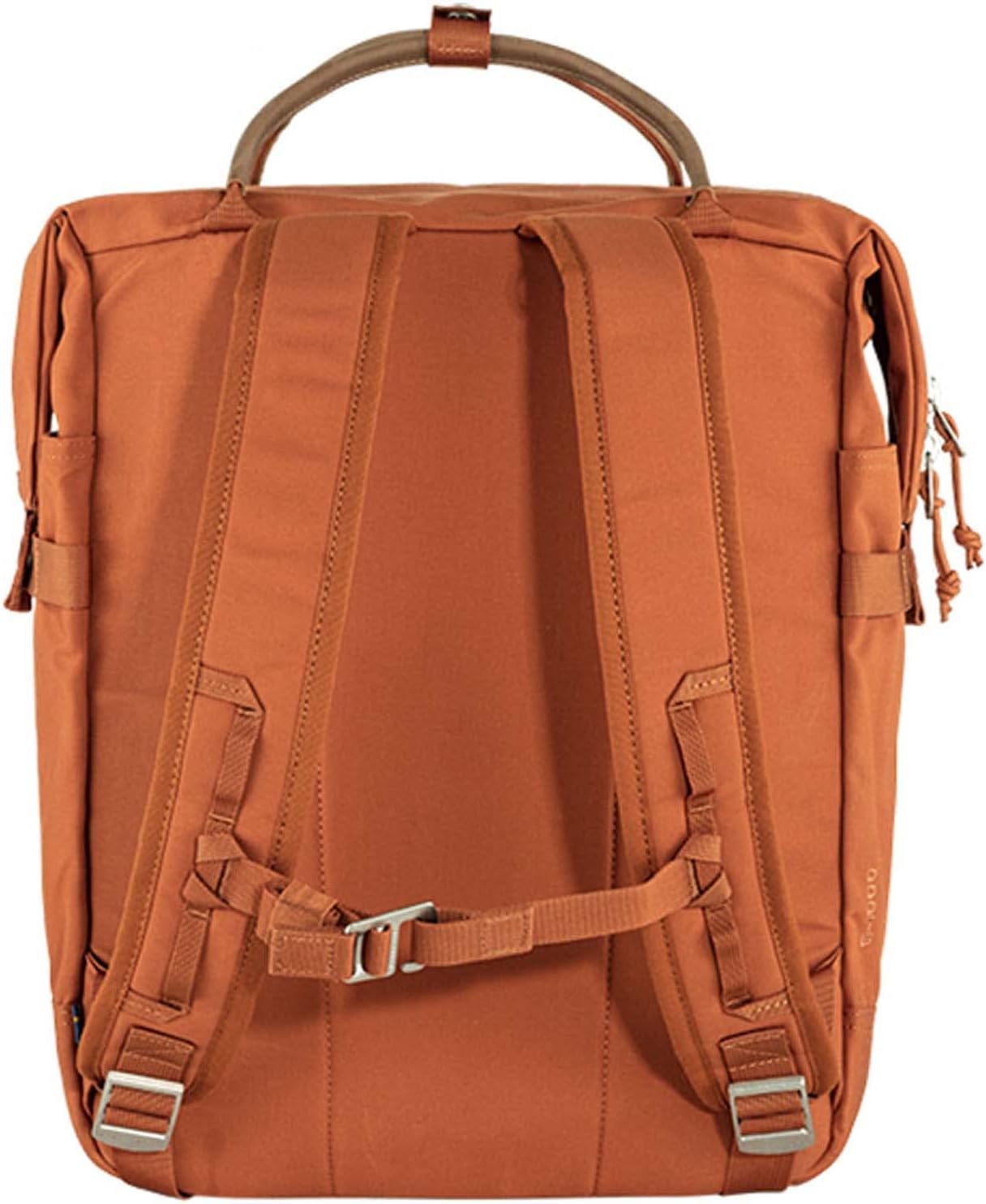
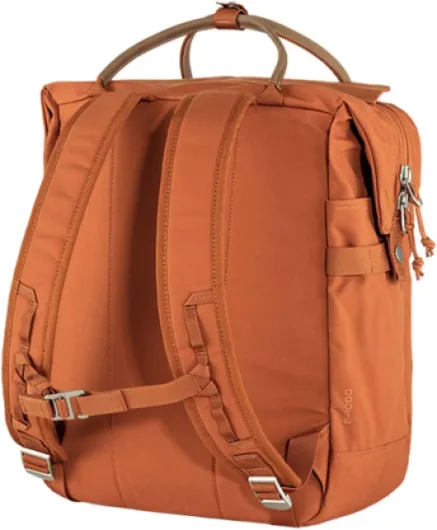
When you first look at the straps, they seem pretty minimal. They’re not big, thick, padded monsters like on a proper hiking pack. I was a bit skeptical at first. In practice, though, the shoulder straps are more comfortable than they look. They’re padded just enough and shaped well, so for normal daily loads (laptop, charger, bottle, small extras), I had no pain or digging in the shoulders, even after walking 30–40 minutes in the city.
The back panel has padding too, so you don’t feel the edges of your laptop or other hard items poking into your back. That part is well done. The weight distribution is decent because of the rectangular shape – the bag sits close to the back and doesn’t sag. The top handles are also more useful than I expected. Grabbing the bag like a tote in tight spaces (subway, plane aisle, car) is very practical, and the two-handle setup makes it balanced instead of flopping around like bags with a single thin loop.
Where comfort is less convincing is on heavier loads or longer distances. If you really stuff it – laptop in a sleeve, charger, water bottle, book, lunch box, maybe a jacket – you feel the weight and the basic nature of the straps. It’s not painful, but you notice you’re not wearing a hiking pack with load lifters and thick foam. There is a chest strap, but it’s not super adjustable. Moving it up or down is a bit of a pain, and you only have a few positions. It’s okay for occasional use, but not something you’ll constantly tweak.
So for what it’s meant to be – a daily/commute/city travel bag – comfort is pretty solid. I used it through full workdays with commute + walking around town and never felt wrecked. But if you plan to hike several hours with it loaded, you’ll quickly reach its limits. It’s city-comfortable, not mountain-comfortable.
Materials: tough fabric, low stretch, and decent weather resistance
The main material is G-1000 HeavyDuty Eco, which is 65% polyester and 35% cotton, with some cow leather details on the handles and logo. In practice, this fabric feels thick and quite rigid at first. It’s not like the soft nylon you get on some modern lightweight packs. It’s closer to canvas, but with a slightly smoother, more technical feel. After a few weeks, it softened a bit but still kept its structure. That’s good if you like a bag that stands up on its own and doesn’t collapse when it’s half empty.
The upside of this fabric is durability. I had no issues with abrasion – no fraying, no weird pulls, and it handled being shoved under plane seats and dragged around on floors without fuss. The zips are also chunky and smooth, which matches what other reviewers said. You can feel they’re made to last, not the thin, scratchy kind you sometimes see on cheaper bags. The leather handles are thick and feel solid in the hand. They darken a bit with use, which gives a worn-in look that I actually like.
Downside: the fabric has almost no give. When the bag is full, that’s it. You can’t really squeeze in "just one more thing" like you might with a more flexible nylon pack. That stiff structure is part of why the bag feels smaller than 23L in use. Another point: it’s not officially waterproof. In light rain or drizzle, it holds up fine – I didn’t see water soaking through quickly, and my stuff stayed dry in short showers. But in a real downpour, you’d want a rain cover or to keep sensitive gear in extra protection. It’s more "weather-resistant" than actually waterproof.
For cleaning, a bit of soap and water was enough to get rid of marks, which matches what one reviewer said about plane dirt. I haven’t had to machine wash it, and honestly, with this type of fabric and leather details, I’d avoid frequent washing anyway. Overall, materials are solid and feel built for years, but the rigidity is both a strength and a limitation, especially if you’re a chronic over-packer.
Durability: built to last, both fabric and hardware
On durability, I don’t have much to complain about. The G-1000 HeavyDuty Eco fabric feels like it’s made for abuse. After being used for commutes, a few flights, and general daily dragging around, mine only shows very light signs of wear – mostly small creases and a bit of softening of the fabric. No tears, no loose threads, no zip issues. It really gives the impression that it’ll last for years if you don’t do anything crazy with it.
The zippers are a strong point. They’re thick, run smoothly, and don’t feel fragile at all. Even when the bag is quite full, I never felt like I was forcing them to the point of breaking. The leather handles and logo also seem to age nicely. They get a bit darker and more flexible, but not in a cheap way – more like how leather shoes slowly break in. I didn’t see any cracking or peeling, which is good given the price of the bag.
The stitching around stress points (strap anchors, handle bases, top opening) is clean and dense. I didn’t see any loose stitches, even after grabbing the bag a lot by the handles when it was full. The bottom of the bag also held up well with being set down on rougher surfaces (airport floors, pavement). No wearing through so far. The only thing I’d watch is keeping it away from sharp metal edges, but that’s true for most fabric packs.
So in terms of build quality and lifespan, it’s one of those bags you can probably keep for many years if your needs don’t change. If you compare it to cheaper backpacks that start fraying or having zip problems after a year, this clearly plays in another league. You pay more, but you can feel where the money went: fabric, stitching, hardware. It’s not indestructible, but for normal use it’s clearly on the “very solid” side.
Performance and everyday use: good for planes and offices, tight for bulky loads
In day-to-day use, the Haulpack No.1 does the job well for a typical office or travel setup. The top zipper opens wide, which makes it easy to see and grab what’s inside. That’s one of my favorite parts: you don’t have to dig blindly; you just open it up and everything is visible. On flights, it slid under the seat in front of me without a fight, and the rectangular shape means it uses the space efficiently. No weird bulges.
The front pockets shine in real life. I kept boarding passes, AirPods, snacks, and charging cables in there. Being able to grab things without opening the main compartment is super handy, especially in airports or in the metro. Also, the fact that these pockets don’t swallow the main compartment space too much is a clear plus. You can have them full and still use most of the inside, which isn’t always the case on other bags.
Where performance drops is capacity vs. expectations. If you just carry electronics and some soft items (pouch, sweater, documents), it’s fine. The moment you try to add shoes, a thick hoodie, or a lunch box plus all the rest, the bag feels maxed out quickly. The fabric doesn’t stretch, so the zips become harder to close, and the side pockets get squeezed. One Amazon reviewer mentioned needing to keep it about 10–15% below full to keep it nice to use – I agree with that. Once it’s really stuffed, the whole user experience gets worse.
Weather-wise, I had it out in light rain with no problem. For heavier conditions, I wouldn’t trust it fully without extra protection, especially for electronics. Overall, as a city and travel companion, it performs well, as long as you respect its limits and don’t expect it to double as a big weekender or serious hiking pack. It’s a competent, reliable daily worker, not a do-it-all monster.
What this Haulpack actually is (and isn’t)
On paper, the Fjällräven Haulpack No.1 is a 23L unisex backpack with a boxy, vertical shape and a top zip that opens wide. Dimensions are roughly 19 x 31 x 39 cm and the weight is about 900 g, so it’s not ultra-light, but that’s normal for a heavy-duty fabric bag. It’s sold as a sort of hybrid between a work bag, daypack, and travel backpack. In use, I’d say it leans more towards “work and city travel bag” than pure hiking pack, despite the brand listing it for hiking too.
The layout is straightforward: one big main compartment with a laptop sleeve against the back, a small internal fabric pocket near the top (basically for small items), two large front zip pockets that run vertically, and two open side pockets for bottle/umbrella. The top has a big zipper and a flap with a snap button that covers the zips, which adds a bit of security and weather protection. There are also two leather grab handles on top so you can carry it like a tote, which is actually pretty handy in crowded spaces or when sliding it under a seat on a plane.
Use cases where it worked well for me: daily commute with a 14" laptop in a separate sleeve, notebook, small tech pouch, a light sweater, and a 500 ml bottle; and as a personal item on flights with electronics, documents, snacks, and a packable jacket. Where it struggled: when I tried to add shoes or a bulkier jacket on top of all that. The bag just doesn’t like being overstuffed – the zips become harder to close, and the front and side pockets get tight.
So if you’re expecting a giant all-purpose hauler, you’ll probably feel a bit limited. But if your typical load is laptop + everyday stuff and you like something that sits neatly under a plane seat and on your back in the city, the format makes more sense. It’s basically a tidy, tough 23L city/work pack with a slightly outdoorsy vibe, not a big hiking or travel monster.
Pros
- Very durable G-1000 HeavyDuty Eco fabric with solid zips and stitching
- Comfortable enough for daily commuting and city travel despite minimal-looking straps
- Practical wide top opening and two large front pockets that stay usable even when the main compartment is loaded
Cons
- Laptop compartment is thin and poorly padded, basically forcing you to use a separate sleeve
- Capacity feels tight for 23L and the bag doesn’t handle overstuffing well
- No truly secure internal pocket and easy-access front pockets are not ideal in crowded or high-theft areas
Conclusion
Editor's rating
Overall, the Fjällräven Haulpack No.1 is a solid, tough daily backpack that works well for commuting, office use, and travel as a personal item. The fabric and build quality are clearly above average, the zips and handles feel strong, and the simple rectangular design is practical in real life. The wide top opening and the two big front pockets are genuinely useful, and comfort is good enough for normal city use with a typical laptop-and-essentials load.
Where it falls short is mainly around the laptop compartment and capacity expectations. The laptop sleeve is basically just a divider with no real protection on the sides, so you almost have to use a separate padded sleeve, which eats into the already limited 23L. The bag also doesn’t like being overfilled – once you try to add shoes or a big jacket on top of your normal gear, zips get tight and the side pockets become less usable. There’s also no truly secure internal pocket, and the external pockets are easy to open, which isn’t ideal in crowded cities.
If you want a durable, good-looking work/travel backpack and you’re okay with its limits (extra laptop sleeve, not a huge hauler, basic organization), it’s a good long-term buy. If you mainly care about laptop protection, lots of organization, or maximum capacity for the price, I’d look at other options first, including some cheaper brands or even other models from Fjällräven like the laptop-focused Kånken versions.