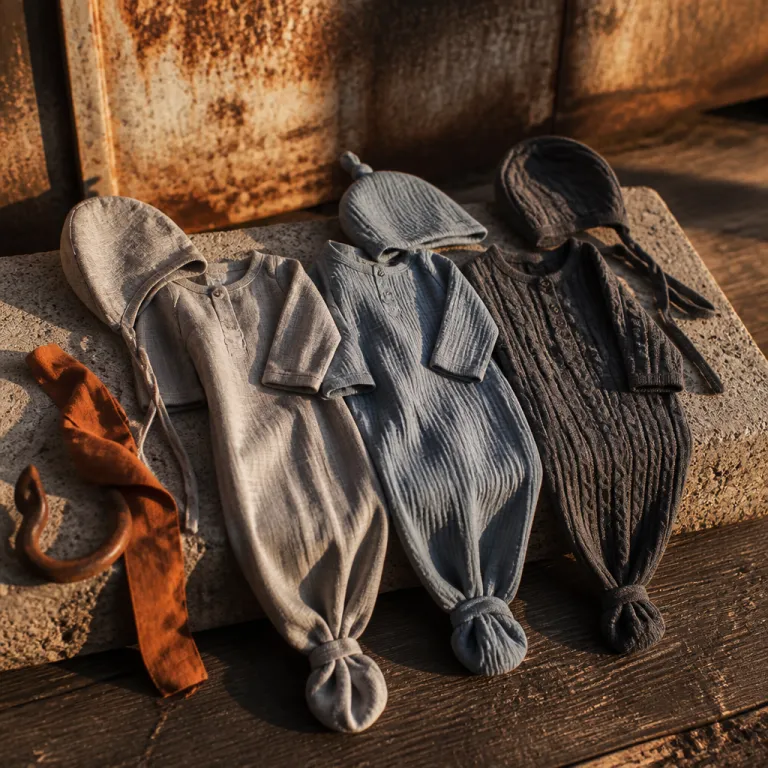
Why newborn gowns matter for infant comfort and style
Newborn gowns sit at the sweet spot between comfort and couture. For a style-conscious parent, the right gown turns every sleepy baby stretch into a tiny runway moment. A well-cut baby gown also makes late night changes calmer, faster, and far less stressful.
When you choose newborn gowns instead of classic rompers, you gain instant access to the hem without wrestling with snaps. That single design detail means a newborn or infant can stay almost fully covered during a change, which keeps body temperature more stable and supports better sleep. Parents who track every minute of infant sleep often notice that a regular gown silhouette can reduce the time a baby spends awake and unsettled on the changing mat.
From a styling perspective, a smocked newborn gown in soft white cotton or an organic cotton pink gown frames the baby’s face beautifully. These gowns photograph especially well, which matters for families curating a visual diary of those first weeks. For more practical days, sleeper gowns in breathable knits work like wearable blankets, while a versatile converter gown can shift from open hem to legged shape when you need extra coverage in a carrier or pram.
Fabric, fit, and fastenings in modern newborn gowns
Fabric is the first decision point when you compare newborn gowns for a baby with sensitive skin. Organic cotton infant gowns, especially in long sleeve cuts, reduce friction and help regulate temperature more reliably than many synthetic blends. When you plan a capsule wardrobe, match each gown to existing tops and bottoms so layering stays effortless and visually cohesive.
Fit comes next, and it is where fashion and function meet in a precise way. A knotted gown allows you to adjust the length as the newborn grows, which keeps the hem safely above tiny toes while still covering the nappy. Parents who prefer a more tailored look often lean toward a smocked gown or a coordinated bonnet and hat set, because the structured details frame the baby’s head and shoulders with a refined line. As a general guide, most babies wear newborn or 0–3 month gowns for the first eight to twelve weeks, so checking weight and length ranges on the size label helps you choose the right fit.
Fastenings define how quickly you can move from sleep to stroller. Designs with a quick-access placket at the neckline or shoulders let you slide the gown over the head without stretching the fabric, which protects the garment’s shape over time. Look for secure poppers or snaps that lie flat against the skin and avoid rough seams at the back of the neck. When you are coordinating with a cotton knit layer, this guide to choosing the perfect newborn cotton sweater for stylish first outfits offers a useful reference point for pairing textures and weights.
Colour stories and gender fluid styling for infant gowns
Colour is where newborn gowns become a true fashion statement for style focused families. A muted slate newborn gown in a soft blue tone feels quietly luxurious, while a brighter blue baby gown works beautifully for a little one who will later transition into bolder toddler looks. Many parents now choose gowns and rompers in shared palettes so siblings and children of any gender can mix pieces without rigid colour rules.
Soft pink remains a classic, yet the most interesting organic cotton pink gown designs balance sweetness with modern minimalism. Look for infant gowns with clean lines, subtle smocking, or a delicate matching bonnet instead of heavy ruffles, because these details age gracefully in photographs and hand-me-downs. White gowns, especially when paired with a matching gown hat, create a gallery ready canvas that highlights the baby’s features rather than the outfit itself.
Prints deserve careful curation, particularly when you are building a long term wardrobe narrative. Tiny florals on smocked gown styles feel timeless for girls, while understated stripes on sleeper gowns or a neutral converter gown can work for any newborn. When you later move into dresses, this review of organic cotton short sleeve and long sleeve dresses for baby girls shows how early colour choices in gowns can echo through the preschool years.
Price, value, and how to read newborn gown labels
Understanding price structures helps you invest wisely in newborn gowns without sacrificing style. Retailers usually list a regular price, a sale price, and sometimes a specific promotion for limited colourways such as slate blue or blush pink gowns. When you see a quick add button or highlighted price tag, it often signals a popular baby gown that sells through fast in core sizes.
Value is not only about the number printed as the price. A regular fit organic cotton gown may carry a higher regular price, yet if it washes well and can be passed from baby boy to baby girl cousins, the long term cost per wear becomes very low. Parents who track wardrobe budgets sometimes calculate a personal price-per-wear metric, dividing the final sale price by the number of expected wears to compare gowns, rompers, and coordinated tops-and-bottoms sets fairly.
Labels also reveal how a gown will behave in real life. Look for clear washing instructions, fibre content, and notes on whether the garment was pre-shrunk, because this affects how a knotted gown or sleeper gowns will fit after several hot washes. Common care symbols include a tub icon for machine wash, a triangle for bleach, and a square with a circle for tumble drying. When a product page shows that certain colours are already sold out, especially in neutral white or blue, it is a strong signal that the design has proven itself with other fashion conscious families.
Building coordinated newborn gown sets for day and night
Thoughtful styling turns individual newborn gowns into a cohesive infant wardrobe. Start with a core set of three to five infant gowns in complementary colours such as white, blue, and a soft pink, then layer in rompers and tops and bottoms that echo those tones. This approach lets you mix a smocked gown for daytime visits with simpler sleeper gowns for night, while keeping every outfit visually connected.
Accessories elevate even the most minimal gown. A matching gown hat or a delicate bonnet frames the baby’s face and keeps warmth where it matters, especially for a newborn with fine hair. For families who enjoy equestrian or heritage aesthetics, pairing a slate blue newborn gown with classic children’s riding boots in later years, as reviewed in this test of elegant children’s riding boots, creates a subtle style thread from infancy to early school days.
Day to night transitions are smoother when each baby gown is chosen with sleep in mind. Long sleeve designs in breathable knits keep the infant comfortable in cooler rooms, while a converter gown can be opened at the hem for quick nappy checks without waking the baby fully. Over time, you will notice which regular gown shapes your baby prefers, and those favourites become the blueprint for future purchases in larger sizes.
Practical styling tips for fashion forward parents of newborns
Styling newborn gowns for real life means balancing aesthetics with the realities of baby care. Always keep at least one clean gown in a quick access position in your drawer or changing bag, because spills and leaks rarely respect your schedule. Choosing two or three sleeper gowns in darker shades alongside white and pastel options ensures that stains are less visible on busy days.
For parents who love editorial level outfits, treat each baby gown as the anchor of a micro look. A smocked gown in cream can pair with textured knit socks, a soft bonnet, and a coordinating blanket, creating a composed ensemble that still allows the infant to sleep comfortably. When dressing a baby boy, resist the urge to default only to blue; a pale pink accent gown or a neutral taupe converter gown can feel unexpectedly chic and very modern.
Care routines protect both fabric and fit. Wash newborn gowns in cool water with gentle detergent, then reshape knotted gown hems and smocking while damp so the details dry correctly. Check labels for recommended wash temperature and whether the garment can be tumble dried on low, and rotate between gowns, rompers, and tops-and-bottoms sets to reduce wear on any single piece, which keeps the regular price you paid aligned with a satisfying long term cost per use.
Key figures shaping the newborn gown market
- Industry overviews of organic textiles, such as the Textile Exchange Organic Cotton Market Report 2023, consistently report strong year-on-year growth in organic cotton baby clothing, and newborn gowns represent a significant share of that expansion because parents prioritise skin friendly fibres from day one.
- Consumer surveys from major parenting communities, including BabyCenter and The Bump polls conducted between 2021 and 2023, indicate that parents typically purchase between six and ten infant gowns or sleeper gowns for the first three months, which explains why retailers often structure multi piece set promotions around this category.
- Sales data shared by large children’s retailers in annual reports and trading updates regularly shows that long sleeve newborn gowns in neutral colours like white and blue sell through faster than brighter prints, reflecting a strong preference for versatile layering pieces.
- Market reports on baby apparel from firms such as Grand View Research and Euromonitor highlight that clothing with easy change features, including knotted gown designs and converter gown styles, has seen notable growth, driven by parents seeking quicker night time changes and better infant sleep.
FAQ about newborn gowns for fashion focused parents
How many newborn gowns does a baby really need ?
Most families find that six to eight newborn gowns cover daily use, with a mix of sleeper gowns for night and more detailed pieces such as a smocked gown or soft pink option for daytime outings. If your baby spits up frequently, you may prefer ten gowns to reduce midweek laundry. Aim for at least two long sleeve infant gowns in warmer fabrics for cooler nights.
Are knotted gowns safe and practical for night sleep ?
Guidance from organisations such as the American Academy of Pediatrics and the UK Lullaby Trust focuses on a firm, flat sleep surface and avoiding loose fabric around the face. A well designed knotted gown that fits correctly and has the knot sitting below the baby’s feet can be used as part of a safe sleep outfit when combined with an appropriate sleep sack or swaddle and when local safe sleep recommendations are followed. Always ensure there is no excess fabric bunching around the legs, and check current advice from your paediatrician or national safe sleep campaign.
What is the difference between a sleeper gown and a converter gown ?
A sleeper gown has an open or elasticated hem that stays in gown form at all times, making it ideal for rapid night changes. A converter gown includes hidden snaps that let you switch between a gown shape and separate legs, which is useful for car seats or carriers. Parents who value versatility often keep at least one converter gown in their regular rotation.
Which colours work best for newborn photos and everyday wear ?
Soft neutrals such as white, cream, and muted blue newborn gowns photograph beautifully and coordinate easily with blankets and accessories. A single organic cotton pink gown or smocked gown with subtle embroidery can add personality without overwhelming the baby’s features. For everyday wear, mixing pale tones with one or two darker gowns helps manage stains while keeping the wardrobe visually cohesive.
How should I care for newborn gowns to keep them looking new ?
Wash newborn gowns in cool or warm water, typically 30–40°C (86–104°F), with a gentle, fragrance free detergent, then reshape smocking, hems, and any bonnet ties while damp. Avoid high heat in the dryer, because it can shrink cotton and distort knotted gown lengths or elasticated hems. Checking care symbols on the label and storing gowns folded rather than hung helps preserve the structure of delicate shoulders and necklines over time.