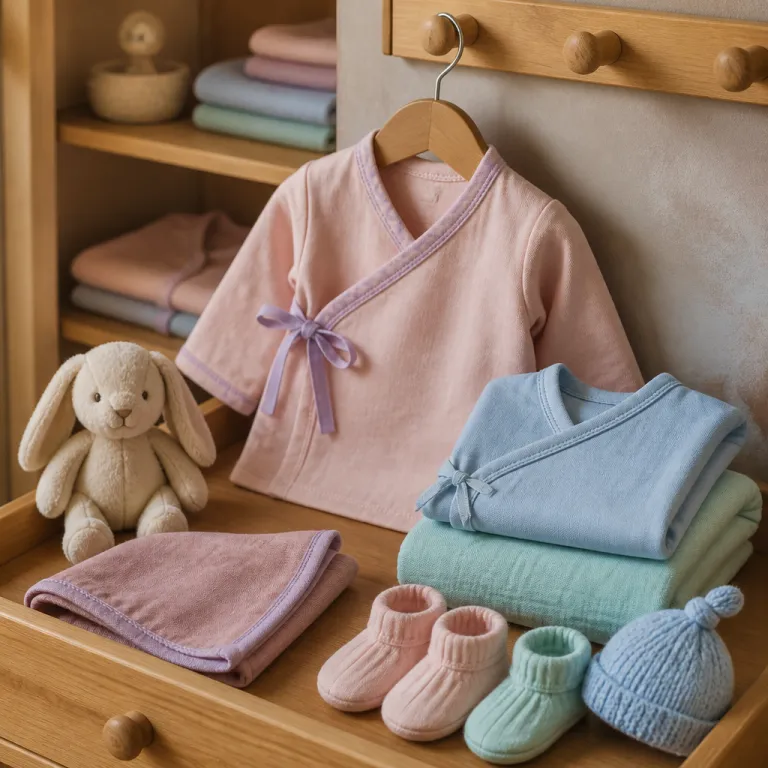

Infant kimono essentials for a refined newborn wardrobe
Why the infant kimono belongs in every newborn wardrobe
An infant kimono offers rare harmony between comfort and quiet luxury. For style-conscious parents who care about details, the wrap front and side ties create a kimono style that feels refined yet effortless. This shape respects the fragility of a newborn baby while still giving families a visually striking baby kimono option.
Unlike many bodysuits pulled over the head, the kimono top opens fully, so the newborn experiences less stress during changes and the parent keeps that serene, composed rhythm that elegant dressing requires. The same principle applies whether you choose a short sleeve kimono onesie for warmer days or a long sleeve kimono for cooler evenings, because the structure stays gentle on the baby’s neck and fontanelle. When you build a baby set around a wrap kimono bodysuit, every layer sits flat and regular against the skin, which helps prevent bulky folds under swaddles or carriers and keeps the wrap lines clearly visible in photos.
Parents in the United Kingdom and beyond now treat the infant kimono as a foundational hadagi, the traditional Japanese inner layer worn closest to the body. This hadagi-inspired approach means the kimono bodysuit or kimono onesie becomes the base of a set kimono look, with leggings, socks, and a soft cardigan layered above. Fashion-focused families appreciate how a single kimono top in the right size newborn can anchor multiple outfits, from minimalist monochrome to playful prints for baby girls or boys, especially when coordinated with matching hats or booties from the same collection.
Fabric, organic cotton and the sensory world of the newborn
For an infant kimono, fabric is never a minor detail. Newborn skin is more delicate and permeable than adult skin, so the choice between conventional cotton and organic cotton directly affects comfort and long-term skin health. When a shop lists a kimono bodysuit as made from certified organic cotton, it usually signals fewer pesticide residues and a softer hand feel, which matters when the garment touches the baby for many hours.
Parents comparing a regular price and a sale price sometimes underestimate the value of premium cotton in the first months, yet the unit price often balances out because high quality organic fabrics wash better and keep their shape longer. A regular cotton baby kimono may feel crisp at first, but repeated laundering can harden the fibers, while an organic cotton kimono onesie tends to stay supple and breathable, even after many cycles at 40 °C. When you calculate the real price per wear, the price unit or unit price of a more expensive baby set in organic cotton can rival that of a cheaper alternative bought on sale.
For style-obsessed parents, the tactile story is as important as the visual image. A long sleeve kimono top in ribbed organic cotton adds subtle texture under a sleeveless romper, while a short sleeve kimono style hadagi layer keeps a newborn baby cool under a summer muslin swaddle. If you are already exploring refined eco-friendly basics such as organic cotton nappies for design-conscious nurseries, aligning your infant kimono choices with the same fabric philosophy creates a coherent, thoughtful wardrobe. Always check care labels for gentle detergents and low tumble settings to preserve both softness and colour depth.
Fit, size newborn and the architecture of a perfect wrap
Fit can elevate an infant kimono from simple essential to runway-worthy baby piece. The size newborn label varies between brands, so detail-oriented readers should always check the centimetre measurements for chest, length and sleeve before committing to a baby kimono set. As a reference, many newborn kimono bodysuits list a chest width of around 19–21 cm and a total length of 32–36 cm, but the exact cut matters more than the number. A well-cut kimono bodysuit should cross neatly over the torso without gaping, allowing the wrap panels to lie flat even when the baby curls or stretches.
When the kimono top is too large, the inner hadagi layer can twist, creating pressure points under the spine or shoulders, while a too small kimono onesie pulls at the crotch snaps and restricts hip movement. Look for designs where the sleeve kimono cut leaves enough room for layering, especially if you plan to pair a long sleeve infant kimono with a cardigan or sleep sack in cooler climates such as the United Kingdom. For newborn baby proportions, side ties or hidden snaps along the wrap edge distribute tension more evenly than a single central fastening and make it easier to adjust the fit over cloth or disposable nappies.
Parents who appreciate subtle tailoring often choose a baby set that includes both a size newborn kimono style top and the next size up, ensuring a seamless transition as the baby grows. This approach keeps the visual language consistent in early photos, whether you are styling minimalist neutrals or soft pastels for baby girls. To complete the head-to-toe narrative, many style-focused families now coordinate their wrap pieces with refined accessories such as elegant infant beanies, creating a cohesive silhouette from crown to tiny toes and avoiding bulky hoods that can interfere with safe sleep.
Price, value and how to read infant kimono product pages
Evaluating the price of an infant kimono requires more nuance than scanning a bold number. On many e-commerce platforms, you will see a regular price, a price regular per unit, and a highlighted price sale or sale price when promotions apply. For a parent passionate about building a curated wardrobe, understanding the unit price helps compare a single kimono top with a multi piece baby set that includes a matching kimono onesie and leggings.
Some shops in the United Kingdom present a clear price unit for each garment in a set kimono bundle, which allows you to judge whether the discount is genuine or simply a marketing tactic. When a baby kimono appears at a dramatically lower sale price than similar organic cotton options, check the fabric composition, stitching density and closure quality before assuming you have found a long-term bargain. As a practical benchmark, many premium infant kimono brands describe tightly sewn seams to keep edges smooth against delicate skin. A transparent regular price combined with detailed size newborn measurements and close-up image galleries often signals a brand that respects both design and customer intelligence.
On product pages, pay attention to how the shop describes the kimono style construction, especially around the sleeve kimono seam and the inner hadagi panel. High resolution jpg images should show the inside finishing, the placement of snaps and the softness of bindings around the neckline for a newborn baby. If the retailer specifies that the item ships from or ships within the United Kingdom, delivery times and return logistics will usually be smoother than for overseas shipments, which matters when you are refining a wardrobe on a tight timeline and want the option to exchange sizes quickly.
Global influences, ships united and the rise of the modern hadagi
The infant kimono has travelled far from its Japanese hadagi origins to become a global baby fashion staple. Brands that ship internationally often describe their logistics with phrases such as “ships to the United Kingdom” or “ships to the United States”, signalling consolidated distribution hubs that serve multiple regions efficiently. For style-led parents, this global reach means a wider choice of kimono style interpretations, from minimalist Scandinavian palettes to bolder prints aimed at baby girls and boys.
When a product description notes that it ships from the United Kingdom, you can usually expect European safety compliance, which is crucial for newborn baby garments with wrap ties and snaps. Many premium labels now photograph each baby set on diverse models and provide more than one jpg image per colourway, helping parents visualise how the kimono top drapes on different body types. This attention to representation aligns with a broader movement in kids fashion toward inclusivity and authenticity rather than staged perfection.
As the infant kimono gains popularity, some designers experiment with hybrid forms such as a kimono bodysuit paired with joggers or a kimono onesie styled under dungarees, while others stay close to the traditional hadagi layering system. Style-aware readers often curate both approaches, using a plain long sleeve kimono top as a base layer and a printed sleeve kimono piece as the visible statement. For complementary footwear that respects this refined yet practical aesthetic, many turn to buyer guides on choosing elegant children’s moccasins, extending the same design language from the nursery to the stroller and beyond.
Styling infant kimono sets for fashion forward babies
Styling an infant kimono is about orchestrating proportions, textures and subtle colour stories. A monochrome baby set built around a white organic cotton kimono bodysuit creates a gallery-like backdrop for a single accent accessory, such as a patterned blanket or bold socks. For baby girls, a blush long sleeve kimono top under a neutral pinafore balances sweetness with restraint, while still keeping the newborn baby comfortable.
Parents who enjoy editorial-level styling often mix regular and sale pieces, pairing a premium organic cotton kimono onesie at regular price with leggings bought at a thoughtful price sale. The key is to maintain coherence in fabric weight and sleeve length, so a short sleeve kimono style layer does not fight visually with a heavy knit cardigan. When you photograph these looks, choose natural light and frame the image to highlight the wrap lines of the kimono top, allowing the garment’s architecture to speak without distraction and giving your baby room to move safely.
For cooler months in the United Kingdom, layering a ribbed long sleeve kimono under a quilted romper adds warmth without bulk, especially when the size newborn fit is precise. In warmer climates, a single kimono top in breathable cotton worn with a diaper cover can be enough, provided the baby’s limbs are protected from direct sun. Whether you are building a capsule wardrobe or an expansive rotation, the infant kimono remains the quiet hero piece that ties every narrative together, from first hospital photos to those early park strolls, and it photographs beautifully in both colour and black-and-white images.
Key figures shaping the infant kimono and organic cotton market
- According to the Soil Association’s Organic Market Report 2023, sales of organic-certified textiles, including baby clothing, continued to grow in the United Kingdom, reflecting rising demand for safer fabrics in newborn wardrobes (Soil Association, 2023).
- Dermatology studies report that up to 20 percent of infants experience some form of atopic dermatitis, which strengthens the case for soft, breathable fibers such as organic cotton in infant kimono designs (Nutten, A. “Atopic Dermatitis: Global Epidemiology and Risk Factors,” Annals of Nutrition and Metabolism, 2015).
- Consumer research from the Global Organic Textile Standard indicates that parents are willing to pay a price premium of around 15 to 20 percent for certified organic cotton garments, especially for items worn daily like kimono bodysuits and onesies (GOTS, Consumer Survey on Organic Textiles, 2021).
- Market analyses show that wrap front garments, including infant kimono styles, now represent a significant share of newborn essentials, driven by easier dressing and reduced stress for both baby and caregiver (Euromonitor International, Childrenswear category brief, 2022).
FAQ about infant kimono essentials
Why choose an infant kimono instead of a standard bodysuit ?
An infant kimono opens fully at the front, so you avoid pulling fabric over a newborn baby’s head, which many infants dislike. The wrap design also allows easier dressing after baths or during night changes. For style-focused parents, the kimono style lines create a more tailored, editorial look than a basic bodysuit.
How many infant kimono pieces does a newborn need ?
For a newborn in the first months, most families find that six to eight kimono tops or kimono bodysuits in size newborn provide a practical rotation. This number allows for spit ups, nappy leaks and weather changes without constant washing. If you live in a cooler climate, include more long sleeve kimono pieces in your baby set.
Is organic cotton worth the higher price for infant kimono garments ?
Organic cotton usually justifies its higher regular price or sale price because it is grown with fewer synthetic pesticides and often processed more gently. These factors can reduce irritation on sensitive newborn skin and improve long-term durability. When you calculate the unit price over many wears, a quality organic cotton kimono onesie often represents strong value.
How should an infant kimono fit around the shoulders and wrap front ?
The wrap panels of a baby kimono should overlap securely without gaping, and the shoulder seams should sit slightly off the edge of the shoulder rather than pulling inward. If snaps strain or the wrap edge rides up toward the neck, the size is too small. Excess fabric bunching under the arms usually signals that the garment is too large for the current stage.
Can infant kimono styles work for both girls and boys ?
Yes, the infant kimono is inherently gender neutral, and most designs suit both baby girls and boys. Colour and print choices create the main difference, so you can keep the same kimono style silhouettes while varying palettes. Many parents now choose soft neutrals in organic cotton to allow easy sharing between siblings regardless of gender.