
Summary
Editor's rating
Value: good quality, but you pay for the brand and the fabric
Design: simple look, smart details, but not for gear nerds
Comfort: fine for daily use, not built for heavy loads
Materials: tough fabric, light padding, and decent water resistance
Durability: built to last, even if it feels a bit stiff at first
Performance in real life: commuting, short trips, and light outdoor use
What you actually get with this Foldsack No. 1
Pros
- Very durable G-1000 fabric and solid metal hardware that feel built to last
- Compact size that works well for commuting and doesn’t feel bulky in crowds
- Simple, neutral design that fits both office and outdoor use
Cons
- No side water bottle pockets and limited internal organization
- Laptop protection is basic and 15" laptops fit tightly
- Price is high for a small, minimalist 16L backpack

Specifications
View full product page →| Brand | Fjällräven |
A small Fjällräven that’s actually made for daily use
I’ve been using the Fjällräven Foldsack No. 1 (the 16L one, in Deep Patina) as my everyday bag for a few weeks: commuting, quick grocery runs, a couple of short hikes, and one overnight trip. I usually rotate between a basic laptop backpack and a more technical hiking pack, so this one sits kind of in the middle. It’s sold as a simple daypack for city and outdoor use, and that’s pretty much how it behaves in real life.
The first thing that struck me is how compact it feels. On paper, 16L sounds small and it is, but it’s not tiny. It takes a 13" laptop comfortably, a 15" fits but it’s tight and not ideal if you carry lots of other stuff. For work days, I managed to fit my laptop, charger, a notebook, a thin hoodie, wallet, keys, and a small lunch box. For a weekend away, I had to be more strategic, but it still worked if I packed light.
What I liked is that it doesn’t scream “technical backpack” or “school bag”. It looks pretty neutral, so I don’t feel weird walking into the office with it, and it’s still fine for a forest walk or a bike ride. The fold-top design is a bit of a love-or-hate thing: it looks clean and it’s secure, but it’s not as quick to open as a normal zipper-only backpack. After a few days, I got used to it, but you do need both hands to open and close the buckles properly.
Overall, the first impression is that it’s a sturdy, no-nonsense backpack that leans more towards durability and simplicity than pockets and organization. If you like a bag with ten compartments and hidden zips everywhere, this will feel bare-bones. If you’re into the Fjällräven style and just want a straightforward daily backpack, it starts off on the right foot.
Value: good quality, but you pay for the brand and the fabric
Let’s talk money. This bag is not cheap for a 16L daypack. You can easily find bigger backpacks for less, and even some decent laptop bags with more compartments at a lower price. So you’re clearly paying partly for the Fjällräven name and partly for the G-1000 fabric and overall build quality. If you’re on a tight budget and just need something to carry books or a laptop, there are cheaper options that will do the job.
Where the value starts to make sense is if you look at it as a long-term purchase. The materials and construction feel like they’ll last several years of regular use. The style is also fairly timeless and neutral, so it’s not something that will look outdated in a year. If you hate replacing bags every 12–18 months because zips break or straps tear, then paying more once for something sturdier can be worth it.
In terms of features, you don’t get much for the price: no fancy organization, no side pockets, no hidden laptop sleeve with thick padding all around, no chest strap. If you’re the kind of person who likes lots of compartments and tech-focused details, the price will feel hard to justify. You’re basically paying for simple design, strong fabric, and a known outdoor brand, not for a ton of features.
Personally, I’d say the value is pretty solid if you specifically want a compact, durable, and minimalist backpack for commuting and light outdoor use. If you just want a bag and don’t care about brand, durability, or style, you can save money elsewhere. It’s not a bargain, but it also doesn’t feel like a rip-off once you actually use it and see how well it’s built.
Design: simple look, smart details, but not for gear nerds
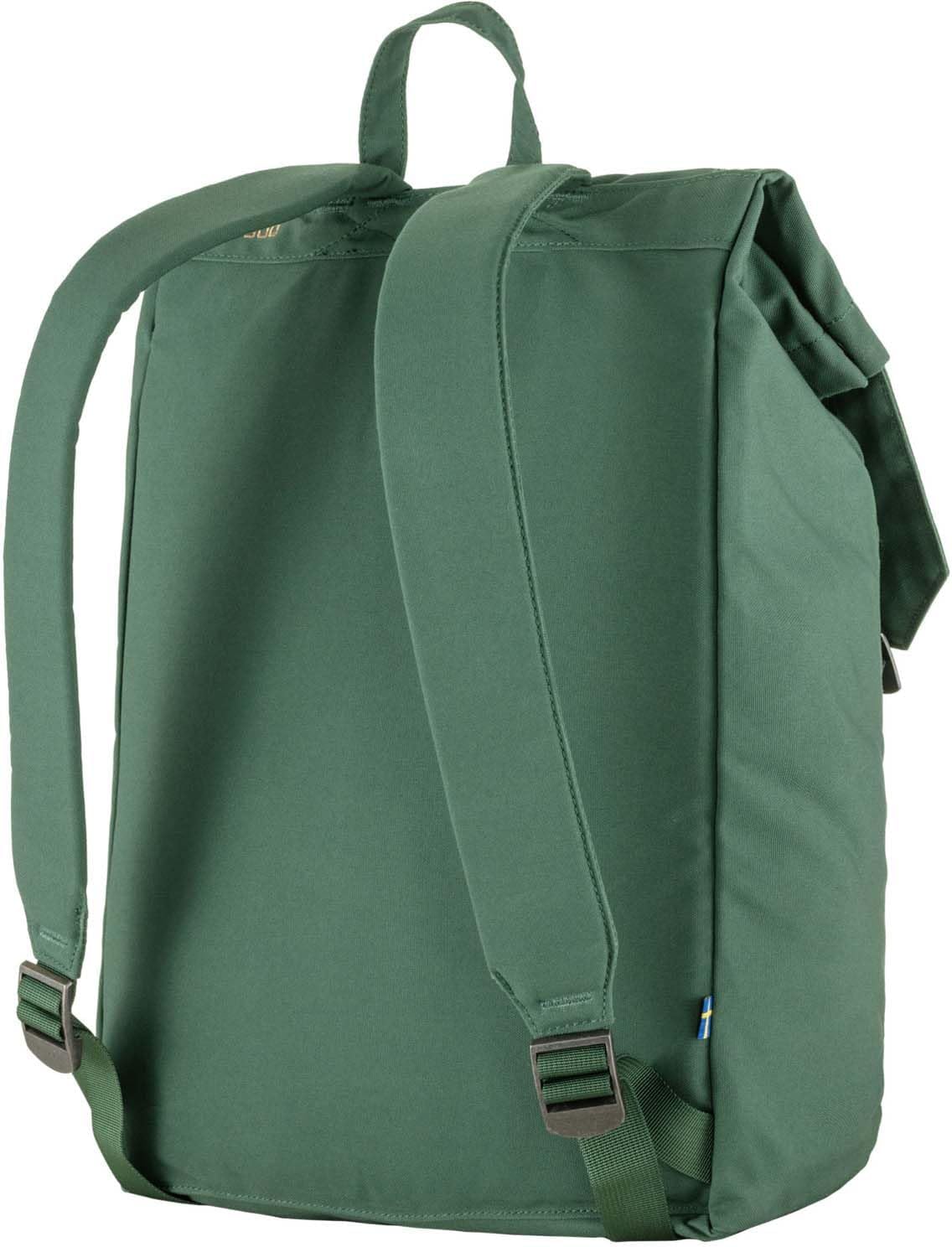
Design-wise, this is very much in the typical Fjällräven style: clean shape, solid fabric, no flashy logos except the small leather patch. The Deep Patina color looks like a muted green/blue mix in real life. It’s easy to match with normal clothes, doesn’t scream “hiking backpack,” and still looks okay with a shirt or casual office outfit. I’ve used it with jeans and sneakers and also with chinos and a casual button-up; it never looked out of place.
The shape is basically a rectangular daypack with a soft structure. When it’s half empty, it doesn’t collapse into a saggy mess, which I like. It keeps a bit of its form, especially because of the padded back. When it’s full, it looks compact, not like a huge turtle shell on your back. On a crowded subway, I just slide it to the front and it’s manageable, unlike bigger 25–30L packs that constantly hit people.
There are a couple of small design choices that are nice in practice: the front pocket zip is protected by the folded top when the bag is closed, so it’s not super exposed to rain or pickpockets. The fabric grab handle on top is handy when you just want to move the bag a short distance or hang it on a hook. And the metal buckles feel solid; they don’t look like they’re going to break or crack easily, which is reassuring compared to plastic clips.
On the downside, the design is almost too minimal in some situations. No side pockets for a water bottle, no external straps for a jacket, no chest strap. If you’re coming from a more technical backpack with a lot of organization, this feels stripped down. Also, the fold-top looks nice but adds one more step every time you want to access the main compartment. So design-wise, it’s good if you like clean and simple, less good if you prioritize fast access and lots of storage options.
Comfort: fine for daily use, not built for heavy loads
In terms of comfort, I’d call this bag good but not luxurious. I’ve worn it on 30–40 minute walks to work, plus some longer days where I had it on and off for a few hours. With a normal load (laptop, charger, notebook, a light jacket, small lunch), it sits well on the back, doesn’t dig into the shoulders, and the padded back panel does a decent job of blocking hard edges from whatever is inside.
The shoulder straps are padded but fairly slim. They’re wide enough to spread the weight, but if you pack it really heavy with books or a lot of gear, you start feeling the pressure on your shoulders after a while. There’s no chest strap or hip belt, so all the weight is on your shoulders. For a 16L daypack, that’s normal, but it’s good to know if you tend to overload your bags. On a short hike of about 2 hours, loaded with a water bottle inside, snacks, an extra layer, and some random stuff, it was fine, but I wouldn’t want to carry 8–9 kg in this all day.
Ventilation-wise, there’s no fancy mesh or air channels on the back. On a warm day, my back did get a bit sweaty, like with most simple backpacks. It’s not worse than others in this category, but if you’re used to technical hiking packs with airflow systems, you’ll notice the difference. The upside is that the back panel is soft and doesn’t have rigid frames or bars that can feel awkward when you’re just wearing a T-shirt.
For public transport and daily city use, the size and shape are actually pretty comfortable. It doesn’t stick out too far from your back, so you’re not constantly bumping people in crowded spaces. I also appreciated the top handle: it’s thick enough to grab comfortably when you’re moving the bag around. In short, comfort is perfectly acceptable for everyday use, but if you know you carry heavy loads or walk for hours every day, there are more ergonomic options with more padding and better weight distribution.
Materials: tough fabric, light padding, and decent water resistance
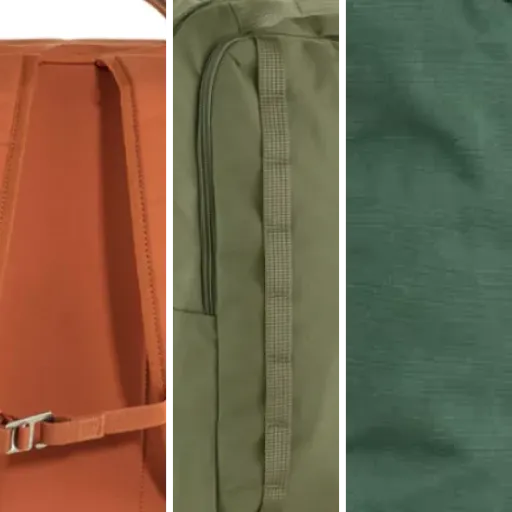
The bag is made from Fjällräven’s G-1000 HeavyDuty Eco and G-1000 Lite Eco on the back panel, which is a blend of 65% polyester and 35% cotton. In the hand, it feels like tough canvas, not like the shiny nylon you see on many cheap backpacks. After a few weeks of use, I’ve brushed it against walls, put it on dirty floors, and squeezed it under seats. It hasn’t ripped or scuffed, and dirt wipes off pretty easily with a damp cloth.
Out of the box, the fabric is already water resistant, not fully waterproof. I walked through a couple of light showers, around 10–15 minutes each, and everything inside stayed dry. I wouldn’t trust it in a heavy downpour for an hour without an extra cover, but for normal city rain and quick walks, it holds up. If you really want more protection, this fabric can be waxed with Fjällräven’s Greenland Wax, but that’s an extra step and extra cost.
The zippers and buckles feel sturdy. The front pocket zipper runs smoothly and doesn’t catch, and the metal buckles on the straps are reassuringly solid. They do add a bit of weight compared to plastic, but at 600g total, the bag is still pretty light. The shoulder straps have enough padding to avoid feeling cheap, but they are not super plush either. Same with the back panel: there is padding, but it’s on the thinner side. For everyday use it’s fine, but if you load it with heavy books or gear, you feel it more than with a heavily padded travel pack.
Overall, the materials give the impression of a long-lasting, low-maintenance bag. You do lose some comfort and softness compared to more cushioned backpacks, but you gain durability and a fabric that doesn’t look worn out after a month. For me, that trade-off is acceptable, especially for commuting and light outdoor use. If you have sensitive shoulders or carry a lot of weight daily, you might want more padding than what this offers.
Durability: built to last, even if it feels a bit stiff at first
Durability is probably the strongest point of this backpack. The G-1000 fabric feels tough from day one. It’s not the softest material, but that’s what makes it reassuring. I’ve tossed it on concrete, shoved it under a bus seat, and dragged it along a park bench, and there’s barely a mark. No loose threads, no weird fraying on the edges, and the color hasn’t faded so far.
The metal hardware (buckles and zipper pulls) adds to that solid feeling. Compared to plastic clips that you see on cheaper bags, these feel like they can handle being pulled and twisted without snapping. The zippers are also holding up well: they run smoothly and haven’t jammed, even when the bag was pretty full. The stitching around stress points like the strap anchors and the top handle looks clean and tight, which is usually a good sign for long-term use.
One thing to keep in mind is that this kind of fabric can feel a bit stiff when new. After a couple of weeks, it started to loosen up slightly and became easier to open and close, but it still feels like a rugged bag, not a soft tote. On the positive side, that stiffness helps the bag keep its shape and protect what’s inside. On the negative side, it doesn’t mold to your body as much as softer materials might, especially when it’s half empty.
Given the build quality, I’d expect this bag to last for years if you use it as a daily commuter or day-hike pack. You might see some cosmetic wear on the corners over time, but I’d be more worried about getting bored of the style than about it falling apart. If you tend to be rough with your stuff and you’re tired of backpacks ripping after a year, this one feels like a safer bet. It’s not bulletproof, but it’s clearly made to handle regular abuse better than most cheap daypacks.
Performance in real life: commuting, short trips, and light outdoor use
In daily use, the Foldsack No. 1 performs like a compact all-rounder. For commuting, it handles the basics easily: laptop, charger, documents, a small lunch, and a light jacket. The front pocket is handy for keys, wallet, and a phone, and the fact that you can access it without opening the top is genuinely useful. On crowded trains, I kept the bag on my front and could still reach tickets and headphones without fiddling with the fold and buckles.
For work, the simple design looks professional enough without being boring. I’ve taken it to the office, to a café to work, and to a friend’s place, and it never felt out of place. The 16L capacity is the main limit: it works great for a normal workday, but once you start adding gym clothes, shoes, or bulky items, you hit the ceiling quickly. For me, it worked best as a straightforward work-and-everyday bag, not a gym-plus-work combo.
On the outdoor side, I used it for a couple of short walks in the woods and a half-day outing. It’s fine for that: water bottle inside the main compartment (since there’s no side pocket), snacks, rain jacket, and a camera. The water resistance handled damp grass and a bit of drizzle without any drama. However, the lack of external straps or bottle pockets is noticeable when you’re outside. You can’t easily strap a jacket or carry a bottle on the outside, so everything has to go inside and you end up opening and closing the bag more often.
For travel, I used it as a personal item on a train trip. It fits under the seat easily, and the rectangular shape makes it simple to pack. Again, capacity is the constraint: for a weekend trip, it works if you pack light and don’t bring bulky clothes. If you’re used to stuffing a lot of things “just in case,” you’ll find it too small. So performance is solid within its limits: good for commuting, short outings, and minimalist travel; not ideal if you need to carry lots of gear or gym stuff daily.
What you actually get with this Foldsack No. 1
On paper, this is a 16L, water-resistant daypack with a fold-down top, a padded laptop pocket, and a couple of extra pockets. In reality, it’s even simpler than it sounds. You get one main compartment, an internal padded base for the laptop, and a front zip pocket that you can access without opening the top flap. There’s also a small internal pocket for small items, but that’s pretty much it. No fancy organizers, no hidden compartments, no side bottle pockets.
The laptop part is worth clarifying: it’s more like a padded base than a full sleeve that hugs your laptop. A 13" laptop sits nicely; a 15" fits but pushes the limits, especially if you also pack a lot of stuff on top. If you’re used to bags with thick padding all around the laptop, this feels basic. For me, it’s fine for normal commuting, but I wouldn’t throw the bag around or stuff it under heavy luggage on a train.
The folding top is simple: you close the main compartment with a zipper, then fold the top down and secure it with two fabric straps and metal buckles. The nice thing is that the front zip pocket stays accessible even when the top is closed, so your phone, keys, or travel card are easy to grab. The downside: if you’re constantly opening and closing the main compartment, the fold-and-buckle routine gets old pretty fast, especially in a rush or on crowded public transport.
Out of the box, there’s no fancy packaging, no extra accessories, nothing special. Just the backpack. It feels like a product designed more for function than for unboxing videos. If you like minimalist gear that just shows up and works, you’ll be fine with that. If you expect lots of small features and clever storage tricks, you’ll probably think, “That’s it?” when you first open it.
Pros
- Very durable G-1000 fabric and solid metal hardware that feel built to last
- Compact size that works well for commuting and doesn’t feel bulky in crowds
- Simple, neutral design that fits both office and outdoor use
Cons
- No side water bottle pockets and limited internal organization
- Laptop protection is basic and 15" laptops fit tightly
- Price is high for a small, minimalist 16L backpack
Conclusion
Editor's rating
Overall, the Fjällräven Foldsack No. 1 is a compact, tough, and straightforward backpack that does its job without trying to be everything at once. It’s well suited for city commuters, students, and people who want one bag that works both for work and for short outdoor trips. The 16L capacity is enough for a laptop, daily essentials, and a light jacket, but not for heavy packers who bring gym gear, shoes, and half their house every day. The materials and build quality stand out: the G-1000 fabric, solid stitching, and metal hardware give you the feeling that this bag will last longer than many cheaper alternatives.
On the flip side, it’s not perfect. The lack of side bottle pockets, limited internal organization, and basic laptop protection mean it’s not the most practical option if you like lots of compartments and quick access to everything. The fold-top design looks nice and adds security, but it’s slower to open than a standard zip-only bag. And the price is on the high side for a simple 16L daypack, so you really need to care about durability, style, and the brand to feel it’s worth it.
If you’re looking for a simple, durable, and compact backpack for everyday use, commuting, and occasional hikes, and you don’t mind paying a bit extra for better fabric and build, this is a good choice. If you want maximum storage, lots of pockets, or a budget-friendly school bag, you’ll be happier with something else. It’s a solid, no-frills backpack that gets the job done and feels like it will keep doing that for years.