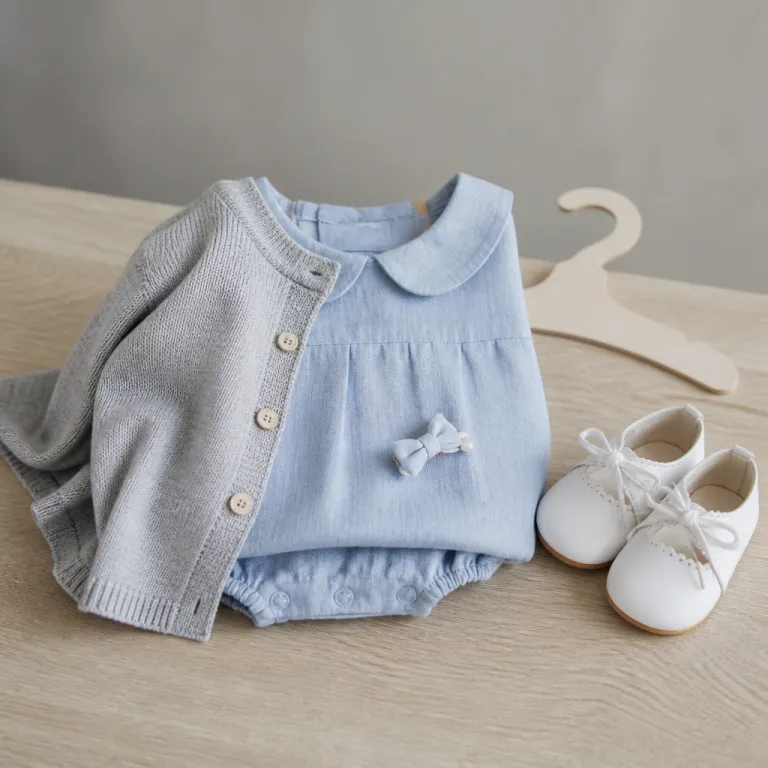
When kids fashion serves the feed, not the child
Scroll any social media platform and you will see it instantly. Children’s outfit posts push many parents into curating tiny wardrobes that look editorial but function terribly for real kids. The result is a generation of children who feel dressed for the camera, not for climbing frames.
Brands understand how social media works and they seed product to child influencer accounts with ruthless precision. When a seven year old in a perfectly steamed linen co ord racks up three times the engagement of an adult outfit post, people in marketing departments take notes and parents feel pressure to keep up with that polished aesthetic. This is how a commercial feedback loop forms where every new drop is designed to photograph well under soft daylight, even if the fabric snags on the first day of school.
For style savvy parents, the trap is subtle because it looks like taste. You tell yourself that your child will feel confident in that mini version of a Jacquemus blazer, yet you know the shoulder line is too sharp for a young body that still cartwheels. Social feeds can nudge parents into mistaking adult tailoring for sophistication, when most children simply feel pressured to keep outfits clean for the next online post.
The language around kids fashion has shifted from play to performance. Parents will talk about “content days” and “shoot outfits” as if their child were a professional model, while the child just wants to run with friends in the park. Many young people do not understand why they must change clothes three times on a Sunday, except that some invisible audience online might judge the look.
Psychologists now describe this as aesthetic parenting, a form of external validation seeking that rides on the back of technology and social approval metrics. Child and adolescent psychotherapist Dr. Angharad Rudkin has warned in interviews that when parents chase online praise, “children can start to feel like projects rather than people”, especially around appearance. When social media aesthetics start to dictate what hangs on the rail, the wardrobe becomes a stage set where peer pressure and adult expectations overshadow everyday needs. The child’s own taste, comfort and sensory preferences are often treated as secondary styling notes rather than the rules that should set every outfit decision.
There is also a quiet class dimension that many parents do not acknowledge. Only a small share of families can afford weekly hauls of logo hoodies, limited sneakers and coordinated siblings looks, yet many parents report feeling pressured by what they see in curated feeds. UK charity Parentkind, for example, has reported that parents frequently cite social media as a source of financial pressure around school clothing and appearance. Those who cannot or will not spend that way can feel excluded from the social conversation at the school gate, even when their children feel perfectly happy in well worn denim and cotton.
For pre teens and early teens, the stakes rise sharply. Young bodies change fast between one school year and the next, and fast moving kidswear trends can push parents to chase every micro look from TikTok streetwear to cottagecore dresses. When outfits are chosen for how they will perform online rather than how they will move through a school corridor, many teens feel pressured to treat clothes as costumes instead of tools for self expression.
Practical do’s and don’ts for everyday outfits
- Do ask whether your child can sprint, sit cross legged and spill tomato sauce in this outfit without drama.
- Do treat their comfort, sensory needs and ability to dress independently as non negotiable design rules.
- Don’t set clothing rules that prioritise likes, comments or compliments over laughter and free play.
- Don’t buy pieces that only make sense in photos but never survive a school day or a playground.
If you feel pressure rising when you see another family’s grid of immaculate neutrals, pause and ask whose comfort is really being dressed.
The economics of kid influencers and the wardrobe distortion
Behind every immaculate kid outfit carousel sits a very adult economy. When parents react to highly produced children’s style content, they are often responding to images shaped by gifting budgets, affiliate links and brand contracts that their kids do not understand. The child sees only that other friends receive endless parcels and new sneakers, while their own wardrobe rotates more slowly.
Brands send free product to kid influencer accounts because the numbers work. Industry social media benchmark reports from major platforms have repeatedly shown that children’s fashion content can generate higher engagement rates than many adult fashion posts, which makes kid influencers attractive to marketers. A single viral reel of young people in matching varsity jackets can move hundreds of units in a week, and internal data will often show a clear uplift in sales compared with a traditional campaign. Parents will rarely talk openly about this commercial layer, yet many who run monetised accounts admit privately that they feel pressured to accept more collaborations than they can realistically style or store.
This is where wardrobe distortion begins. Instead of a tight edit of jeans, jerseys and dresses that suit the child’s actual school and weekend life, rails fill with statement pieces worn once for an online post. Social media driven kids fashion can nudge adults into buying for the photo rather than the playground, which leaves children navigating drawers of clothes they do not feel confident wearing to climb, paint or cycle.
Mini me dressing amplifies the effect. Matching silk sets, tiny trench coats and logo knits look charming in a grid, yet they rarely align with how young bodies move or how school rules about practicality are written. When the family budget bends around these staged moments, children can feel pressure to keep outfits pristine, and they may avoid messy play with friends who do not share the same constraints.
There is also the question of consent and labour. A child who is asked to pose in every new delivery may not feel like a participant in fashion play but like a small employee in a content studio. Over time, some parents begin to treat their child’s image as an asset, and young people can internalise the idea that their value lies in how well they perform online.
Fashion do’s and don’ts for money and collaborations
- Do set a hard budget for trend led pieces and keep most spend on durable, comfortable basics.
- Do explain in age appropriate language how gifting, sponsorship and affiliate links work.
- Don’t let free items or brand deals dictate your family style rules or your child’s schedule.
- Don’t treat your child’s image as a business asset they cannot meaningfully consent to.
Celebrity culture pours fuel on this fire. When you see the children of actors and musicians in head to toe designer looks, it is easy to forget that their wardrobes are often managed by stylists and supported by sponsorship deals. A thoughtful analysis of the impact and influence of celebrity kids fashion shows how quickly aspirational images become everyday expectations for regular families.
For fashion passionate readers, the challenge is to admire styling without importing the entire economic model into your living room. Ask whether a look still works when translated into mid range cotton, denim and jersey, and whether your child will wear it more than three times in a real month. If the answer is no, the outfit belongs on a moodboard, not in a bursting wardrobe.
The child’s view: when dressing up stops being play
From the child’s side of the lens, the story feels different. Many kids love clothes, colour and costume, yet social platforms can push parents to choreograph these instincts into content rather than free play. The shift happens quietly when dressing up becomes a task with rules instead of a game with options.
Pre teens will often tell you that the worst part is not the outfit but the repetition. Standing in the same corner of the living room while a parent adjusts a collar for the third time can make even a soft organic cotton hoodie feel like armour. Some children feel pressured to smile through itchy seams or stiff denim because they sense that adults care more about the shot than their comfort.
There is also the social layer at school. When outfits from the weekend appear online, classmates may comment on them in the playground, and young people can feel pressure to maintain that same level of polish every day. If a child arrives in simple leggings and a T shirt after a string of styled posts, they may feel less confident, as if they have broken some invisible rules of appearance.
For neurodivergent kids or those with sensory sensitivities, this environment can be especially harsh. A child who prefers soft seams, loose waistbands and breathable cotton might don structured jackets or synthetic tulle only for the camera, then rip them off as soon as the reel is done. When aesthetics are consistently prioritised over comfort, these children feel that their real needs never make it into the brief.
Age appropriateness is another fault line. Teens and younger tweens are exposed to adult trends through technology long before they are ready to inhabit them, and parents will sometimes fast forward their child’s style to match what performs online. Cropped tops, heavy logos and hyper stylised streetwear can look sharp in a grid, yet many kids feel pressured to present a tougher or more polished persona than they actually feel inside.
Listening to kids about clothes
- Do ask your child which fabrics they like and which silhouettes make them feel confident at school.
- Do notice which outfits they reach for without prompting and which they quietly avoid.
- Don’t set outfit rules based solely on what earns compliments from other parents or online followers.
- Don’t ignore sensory feedback, especially from neurodivergent children who may struggle to tolerate certain textures.
There is a healthier way to share style. Some families now post what they call “real life fits” — the grass stained joggers, the paint splattered sweatshirts, the leggings with repaired knees — as a quiet rebellion against the pressure to present perfection. Guides that focus on fashion forward kids show how to build outfits that respect movement and personality first, then aesthetics.
When children see their everyday clothes celebrated, not just the special occasion looks, they start to feel pressure lift. They learn that style is something they own, not something they perform for an unseen audience. That lesson will carry them into their teen years with a stronger sense of self than any sponsored haul could buy.
From grid ready to life ready: practical do’s and don’ts by age
Shifting from grid ready outfits to life ready wardrobes requires deliberate choices. Social media trends can push parents to chase every new look, yet a few grounded rules can reset the balance in favour of the child. Think of it as styling for movement first, memory second and media last.
For kids aged eight to ten, prioritise fabrics and cuts that can handle a full school day plus the walk home. Choose mid weight cotton jerseys, brushed fleece and soft denim with at least two percent elastane, and avoid any piece that your child cannot pull on and off alone in the changing room. If you feel pressure to buy that stiff selvedge jean because it photographs beautifully, remember that independence in the bathroom matters more than likes online.
Pre teens between ten and twelve often start to negotiate directly about clothes. This is where social media driven kids fashion can influence parents most intensely, because young people arrive with screenshots, saved reels and very specific brand requests. Do not dismiss their references, but translate them into age appropriate versions — a relaxed cargo trouser in cotton instead of a hyper low rise nylon style, or a graphic hoodie in organic fleece instead of a cropped top that breaks school rules.
For early teens up to fourteen, co create a capsule that respects both their emerging identity and your boundaries. Set a clear budget together and agree on which pieces can be trend led experiments and which must work hard across school, weekends and family events. When online style culture tempts you to overspend on a single logo item, counterbalance with versatile trainers, a well cut parka and knitwear that layers across seasons.
Across all ages, build in what I call “mess allowance”. Every child should own at least two outfits that are explicitly for mud, paint, cooking and rough play, and parents will do well to photograph these moments too. When you post those images, you quietly push back against the pressure to curate only spotless scenes, and your child sees that joy matters more than polish.
There is also room to rethink silhouettes. Oversized everything has become a dominant look in youth culture, and a thoughtful discussion on whether kids fashion is losing its shape or finding its freedom shows how this trend can either liberate or swamp young bodies. The do here is to check that sleeves stop at the wrist, hems clear the ground by at least three centimetres and your child can run without tripping, while the don’t is to buy a size up purely because it looks cooler in photos.
Age based checklist for life ready wardrobes
- Do involve eight to ten year olds in choosing practical fabrics they can manage themselves.
- Do help ten to twelve year olds translate online trends into school friendly, age appropriate outfits.
- Do agree budgets and boundaries with early teens so they can experiment safely with personal style.
- Don’t skip “mess outfits” that are explicitly for mud, paint and rough play, even if they never appear online.
Finally, reset your own relationship with posting. Decide in advance how many outfits per month you will share, and stick to that number even when a new drop tempts you to break your own rules. If you feel pressured by other parents or by people online to show more, remember that your child’s right to move, spill and grow in peace outweighs any algorithmic reward.
When in doubt, ask one simple question before you pay at the till. Will my child reach for this piece on a grey Tuesday when no camera is around, or does it only make sense in a carefully lit square? The best kids fashion is not what photographs well, but what survives the playground.
Key figures on kids fashion, social media and parental pressure
- Industry social media benchmark reports suggest that children’s fashion content on major platforms can generate significantly higher engagement than many adult fashion posts, which intensifies how strongly visually driven kidswear trends influence parents’ choices. For example, several platform level summaries published in recent years have highlighted above average interaction rates on family and kids style posts.
- Mini me and twinning hashtags have helped drive a global boom in parent child matching fashion sales in recent years, showing how people respond financially when young children are styled as extensions of adult aesthetics. Market analysts have repeatedly noted that coordinated family looks are now a distinct growth category within childrenswear.
- Surveys from parenting organisations and family charities indicate that a majority of parents feel pressure from social media to dress their children in on trend outfits, even when those clothes are impractical for school or playground use. In UK polling cited by groups such as the Children’s Society, many parents link online comparison with anxiety about keeping up materially.
- Research on young people and technology use consistently finds that many teens feel pressured by appearance related expectations in photos shared online, which includes clothing, body image and perceived brand status. Large scale studies on social media and adolescent wellbeing, including reviews by UNICEF and national health bodies, have repeatedly flagged this pattern.
- In France, specific legislation was introduced in 2020 to regulate the commercial use of child influencers’ images, setting rules on working hours, earnings and the right to erasure. In many other regions, however, children still do not fully understand the long term implications of having their outfits and daily lives monetised online, and regulation remains patchy.
Suggested image alt text for this article: “Child in comfortable, slightly grass stained clothes running across a playground, while a parent watches without holding a phone.”