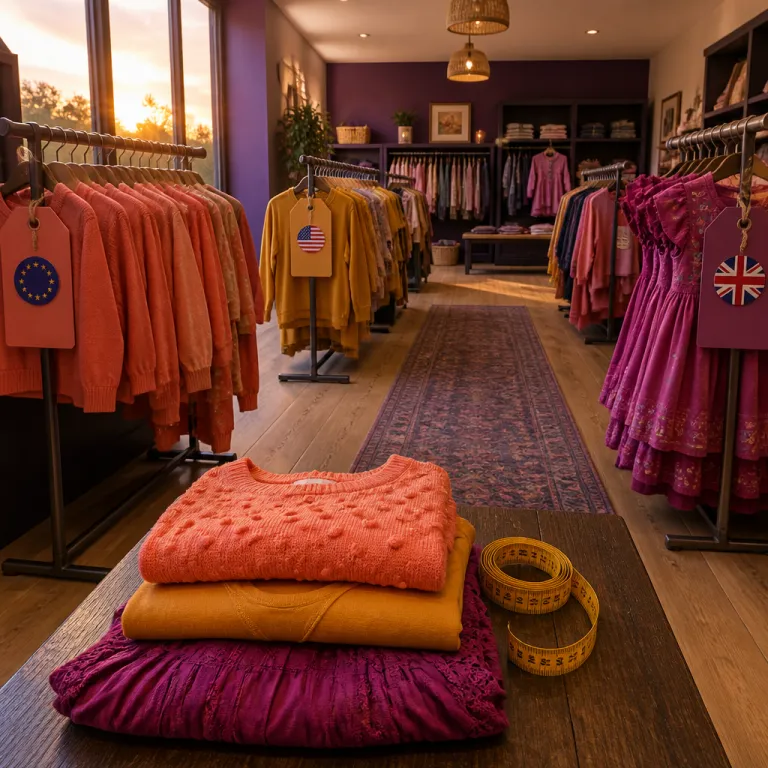
Why kids clothing sizes feel so confusing across borders
Walk into any global kids clothing store and the size labels start to clash. A European size that reads "68" sits beside a US "3 months" and a UK "0–3 months", yet each clothing size quietly assumes a different child height and weight profile. For a young parent juggling nap schedules and online carts, an international kids clothing size comparison quickly becomes less of a guide and more of a guessing game.
European size systems for babies and kids are built around centimetres, so a european size 68 usually means a child height of about 68 cm, while US labels lean on age in months or years, and UK labels toggle between both systems in the same rail. That means one brand’s size chart for 12 months can be cut for a long, lean baby, while another clothing size in the same nominal age fits a shorter, small toddler with a different chest waist balance. International size language looks universal on paper, yet in practice these clothing sizes behave like three dialects that rarely translate cleanly.
Parents feel this when a size kids garment marked 6–9 months barely buttons over the chest, while another label in the same age height range swamps the waist and drags past the ankles. The problem is not your kid or their weight height curve; it is that each brand’s size guide quietly encodes its own idealised kid body. A credible cross-border kids clothing size comparison starts by treating every label as a suggestion, then cross checking it against your own tape measure, your own child, and your own sense of how fast kids grow.
Decoding EU, US, and UK labels for babies and toddlers
EU vs US vs UK baby clothing size labels
For babies under 24 months, the EU system prints the expected child height directly on the label, so you will see 50, 56, 62, 68, 74, 80 and so on. US baby clothing sizes instead use months such as newborn, 0–3 months, 3–6 months, 6–9 months, 9–12 months, and 12–18 months, while UK labels often mix both by writing 3–6 months alongside a european size like 62–68. On paper this looks like a neat size conversion, but in reality each brand’s size chart still assumes its own chest, waist, and thigh proportions.
When you read a baby size guide from a Scandinavian label such as Mini Rodini or Polarn O. Pyret, the european size is usually generous in length, designed for kids who move early and stretch fast. A US mass market brand might cut the same age range wider through the chest waist area, expecting a softer baby shape and more layering under the clothing. UK brands often sit in the middle, so a UK 6–9 months can feel like a small US 6–9 months but shorter than the equivalent EU clothing size, which is why a careful comparison between European, American, and British kids sizes matters before you click checkout.
Toddler clothing size conversion snapshot
For toddlers, the US system switches to T labels such as 2T, 3T, and 4T, while EU labels simply keep climbing in centimetres and UK labels may write 2–3 years or 3–4 years. A 2T is usually cut for a toddler who is still in diapers, with extra room in the seat, whereas an EU 92 or 98 in the same age height band may be slimmer through the hips. Before you trust any conversion chart for toddler clothing sizes, measure your kid’s height, chest, and waist, then match those numbers to the brand’s own size chart rather than relying on the printed age.
Lead content in kidswear has become a parallel concern, especially when parents shop fast fashion for multiple sizes at once. For a clear, evidence based overview of recent testing on children’s shirts and how that intersects with sizing and fabric choices, read this detailed report on lead found in kids fast fashion shirts, which summarises independent lab testing and regulatory limits. Safety, not just the right fit, should sit at the heart of any international kids clothing size comparison.
At-a-glance baby size snapshot
| Approx. age | EU label (height) | US label | UK label |
|---|---|---|---|
| 0–3 months | 56–62 cm | 0–3 months | 0–3 months / 56–62 |
| 3–6 months | 62–68 cm | 3–6 months | 3–6 months / 62–68 |
| 6–9 months | 68–74 cm | 6–9 months | 6–9 months / 68–74 |
| 9–12 months | 74–80 cm | 9–12 months | 9–12 months / 74–80 |
This table reflects the kind of ranges you will see on major brands’ size charts, such as those published by H&M, Gap, and Next, but always check the specific measurements listed by the label you are buying.
Quick toddler size comparison
| Approx. age | EU label (height) | US label | UK label |
|---|---|---|---|
| 1–2 years | 86–92 cm | 18–24 months / 2T | 1–2 years / 86–92 |
| 2–3 years | 92–98 cm | 2T–3T | 2–3 years / 92–98 |
| 3–4 years | 98–104 cm | 3T–4T | 3–4 years / 98–104 |
How to measure your child for a precise international fit
Step-by-step kids clothing measurement guide
Before you attempt any size conversion between EU, US, and UK labels, you need reliable measurements taken at home. Start with height by standing your kid against a wall without shoes, marking the top of the head, then measuring from floor to mark in centimetres for a clean european size reference. Repeat this every few months, because kids grow in sharp spurts rather than gentle curves, and a static size chart cannot keep up.
Next, measure the chest by wrapping a soft tape around the fullest part, under the arms and across the shoulder blades, keeping it level but not tight. Then measure the waist at the natural crease when your child bends sideways, which gives you a realistic chest waist ratio to compare against each brand’s size guide. For trousers or leggings, add an inseam measurement from crotch to ankle, because two clothing sizes with the same age height label can differ dramatically in leg length.
Simple measurement diagram in words: imagine a line from the top of the head straight down to the floor for height; a horizontal loop around the ribs just under the arms for chest; a loop around the softest part of the tummy for waist; and a line from inner crotch seam to ankle bone for inseam. These are the same reference points used in WHO and CDC child growth charts, which is why they translate well across international sizing systems and help you interpret percentile curves more accurately.
Measuring kids shoe size and inner sole length
Shoe size is its own universe, and a cross-region kids clothing size comparison is incomplete without it. Trace your child’s foot on paper, measure from heel to longest toe, then add about 1 cm for growth room before checking a size chart for EU, US, and UK shoe size equivalents. A good conversion chart will show that an EU 24 does not always equal a US 8 for boys girls, so always cross check the inner sole length rather than trusting the international size code alone.
Parents who shop widely across brands often keep a mini database of measurements on their phone. Note your child height, chest, waist, and current shoe size, then update these numbers every one or two months during fast growth phases. This habit turns every future clothing size decision into a quick match against the brand’s own size guide instead of a stressful guess.
Celebrity children in directional outfits have normal growth spurts too, and their stylists rely on the same measurements when pulling looks from international labels. For a cultural lens on how star kids influence what ends up in your cart, including how aspirational looks meet real life sizing, explore this analysis of celebrity kids fashion influence, which draws on runway images, red carpet styling, and retail sell-through data. Style may start on the red carpet, but the fit still begins with a tape measure on the nursery floor.
Kids shoe size and inner sole guide (approximate)
| EU shoe size | Approx. US kids | Approx. UK kids | Inner sole length (mm) |
|---|---|---|---|
| 22 | 6 | 5 | 140–145 |
| 23 | 7 | 6 | 147–152 |
| 24 | 8 | 7 | 155–160 |
| 25 | 8.5–9 | 8 | 162–168 |
These ranges mirror the guidance used by many children’s footwear brands and align with podiatry recommendations that emphasise inner sole length over the printed size code.
Smart sizing strategies by garment type and age
Outerwear vs base layers: choosing the right kids size
Once you know your child’s measurements, the next step is choosing how each piece should fit. Outerwear such as padded coats, parkas, and snow suits should usually be bought one clothing size up, especially in EU systems where a european size 98 coat on a 92 cm child leaves room for layers. For base layers, leggings, and ribbed tops, a closer fit in the current size guide range is safer, because oversizing can cause tripping, twisting, and cold air gaps.
For babies under 12 months, prioritise soft fabrics and easy changes over fashion drama, and treat any cross-market kids clothing size comparison as a starting point rather than a rule. A footed sleepsuit in a small US 3–6 months may match an EU 62 or 68 depending on the brand’s size chart, so always check the stated child height and weight height range. For toddlers, especially those in daycare, choose clothing sizes that allow them to pull trousers up and down alone, which usually means avoiding overly long legs or tight waists even if the label says the age is correct.
By the time kids reach 4–6 years, their proportions diverge sharply, and the same age height label can fit two classmates in completely different ways. Some brands quietly borrow patterns from men sizes or women sizes blocks for older kids, which can make the chest waist balance feel off on a still growing child. When a size kids garment looks suspiciously shaped like a scaled down adult piece, trust the mirror and your kid’s comfort over the printed clothing size.
Accessories follow their own sizing logic, especially for boys girls with lots of hair or sensitive scalps. When choosing hair clips or bows, for example, a medium size can overwhelm a very small toddler head but look perfect on a preschooler with thicker hair. For a practical example of how accessory sizing is specified in centimetres and pairs, see this detailed review of medium size hair bows for toddlers and girls, which breaks down measurements in a way that mirrors a good international kids clothing size comparison.
Reading between the labels: fashion do’s and don’ts for size savvy parents
Do’s and don’ts for international kids clothing size comparison
One of the biggest do’s in any cross-border kids clothing size comparison is to treat labels as flexible, not fixed. Do use the brand’s size chart as a translation tool between international size codes, but do not assume that all clothing sizes marked 4 years or 104 cm will share the same chest, waist, and hip ease. The don’t is simple; do not buy three future sizes of the same piece just because the sale price is tempting, because kids grow in unpredictable directions and the fit may be wrong by the time you reach that label.
Another essential do is to track how specific labels behave on your child over time. If a Scandinavian brand’s european size always runs long and narrow on your kid, note that its size guide suits leaner frames, while a US heritage label might be your go to for broader chests and stronger calves. A practical conversion chart in your head might sound like this: "this French brand runs small, so I size up, while this UK brand runs wide, so I stay true to the stated age height".
Parents sometimes ask whether men or women size systems can help decode older kids ranges, especially when brands blur the line between teen and adult collections. The answer is that men sizes and women sizes are built around adult proportions, so borrowing those charts for a preteen rarely yields a good fit, even if the chest waist numbers look similar. Instead, focus on child height, current weight height, and how your kid actually moves in the garment, because the right size clothes are the ones that let them sprint, climb, and sprawl without thinking.
Finally, remember that any international kids clothing size comparison is a tool, not a verdict on your child’s body. Some kids will sit in one clothing size for years, others will leap two sizes in a single season, and both patterns are normal. The only rule that matters is this: choose the size that respects their comfort and personality, not what photographs well, but what survives the playground.
FAQ
How do I use EU height based sizes when I only know my child’s age ?
Start by measuring your child height in centimetres without shoes, then look for the closest european size number on the label or size chart. If your kid is between two clothing sizes, choose the larger one for outerwear and the smaller one for fitted pieces. Age in months or years is only a rough guide, while height gives you a far more accurate reference across EU, US, and UK systems.
Why does a 12 months size fit so differently between brands ?
Each brand builds its size guide around a different growth model, so one 12 months pattern may assume a long, slim torso while another expects a shorter, rounder baby. That is why any serious comparison of European, US, and UK kids sizes always recommends checking the brand’s own size chart for chest, waist, and height ranges. When in doubt, measure your child and match those numbers instead of trusting the printed age alone.
How much growth room should I allow in shoes for my toddler ?
For toddlers, most podiatrists suggest leaving about 1 cm of extra space between the longest toe and the front of the shoe. Measure the foot, add that growth allowance, then use a conversion chart to translate the length into EU, US, and UK shoe size codes. Too much extra room can cause tripping, so resist the urge to buy several sizes up just to make the shoes last longer.
Can I use adult men or women size charts for older kids ?
Adult men sizes and women sizes are drafted around mature proportions, including shoulder width, chest waist balance, and hip shape, which rarely match a still growing child. Even if the measurements look similar on paper, the resulting fit can feel restrictive or distorted on a kid who still needs full freedom of movement. It is safer to stay within dedicated kids clothing ranges and use each brand’s size guide to navigate between EU, US, and UK labels.
How often should I remeasure my child for clothing and shoes ?
During the first 24 months, remeasure every one to two months, because babies and toddlers can jump clothing sizes quickly. From preschool to early school years, checking height and shoe size every three to four months usually keeps your cross-border kids clothing size comparison accurate. Growth is rarely linear, so watch for sudden ankle flashing or tight chest buttons as signs that it is time to size up.